



Wandering in the Whiteshell

Wandering in the Whiteshell

Ah it’s a beautiful day here in Whiteshell Provincial Park. It’s warm and sunny; perfect weather for lying on the beach. Unfortunately that’s not what I did today because I am not here on vacation: I am working. After a quick breakfast I was on a hiking trail near Falcon Lake, where no botanist (at least to my knowledge) has gone before. What was I doing? After putting on my nearly impenetrable mosquito-proof clothing and gloves, and my backpack full of gear, I set out to collect spring fungi, lichens, mosses and plants (mostly sedges and ferns) that had not been collected in the area before. If you’re wondering why I’m doing this, go back and read my blog “41 Uses for a Dead Plant.”

Even though the trail I was on was only 5 km long, it took me 3.5 hours to reach the end. Botanists spend a lot of time staring intently at the forest floor and periodically crawling around on it to find tiny little plants and lichens. I spent half an hour in one little patch of birch and fir collecting a bewildering diversity of Cladonia lichens. The only problem with pausing for so long is that all the mosquitoes, horseflies and black flies find you. The hike back was not so buggy as I stopped only occasionally to collect a few plants that I missed.
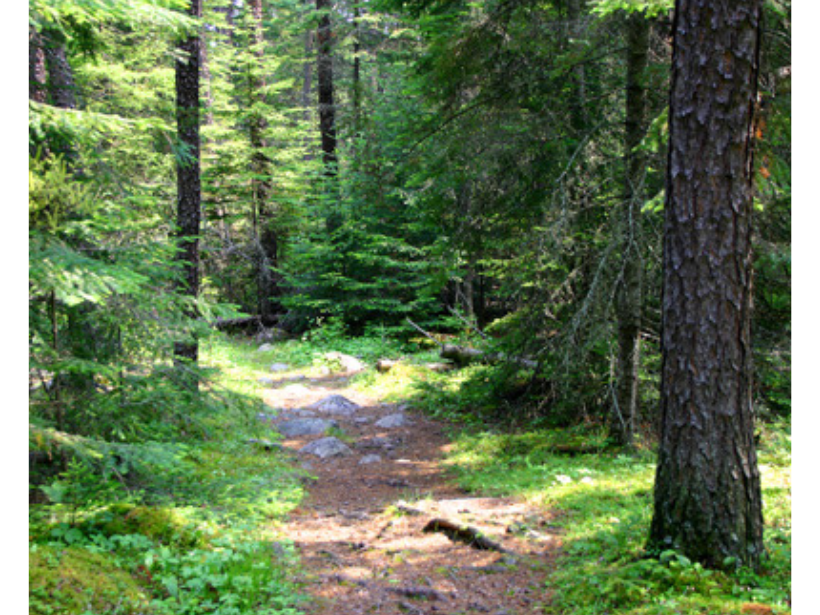
An uneven path through a wooded area.

Hiking trail in the Whiteshell.

Close-up on a low-growing plant with lots of small red flowers.

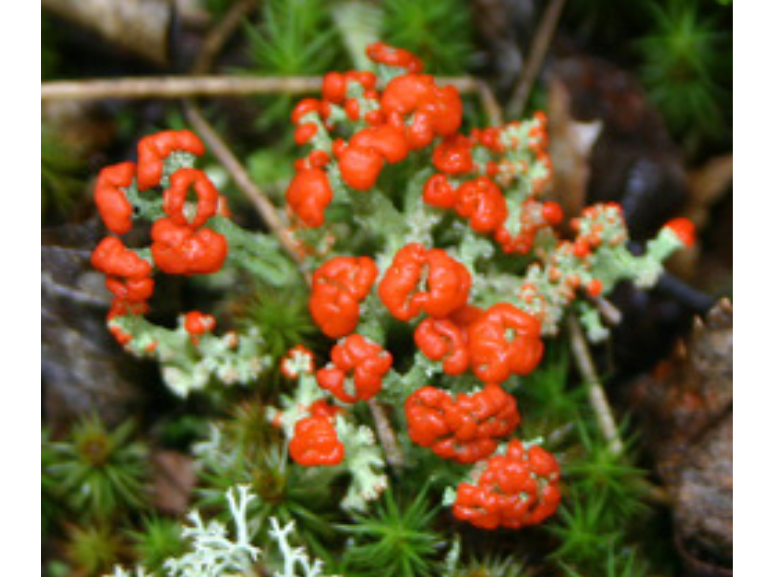
A pixie-cup (Cladonia) lichen.

At one point I stopped to collect some mushrooms from an old log. Breathing deeply, I was enchanted by the scent: the rich smell of decaying wood combined with the resinous scent of fir needles and the crispness of moss. It smelled like life. I wondered briefly how many species of insects, fungi and bacteria were in a single handful of this humus? Probably millions. Urban soils, poisoned and stripped of all their diversity, just don’t have the same odor. I’m not sure why people insist on ripping out the native vegetation at their cabins and replacing them with lawn; it just doesn’t smell as good.

At the end of my hike, I was sweating profusely (it was very humid), hungry, thirsty and experiencing “the willies” from being surrounded by the various insects that were intoxicated by the large quantities of carbon dioxide I was exhaling (I’m not in peak hiking condition yet). Once I got to my car, I headed back to the cabin for a late lunch and a much needed shower. After lunch I hiked along the shore of the lake to collect some aquatics. The remainder of the day was spend carefully pressing and labeling my specimens, making spore prints, putting mushrooms in the dehydrator and recording field notes. Tomorrow I get to do this all over again.
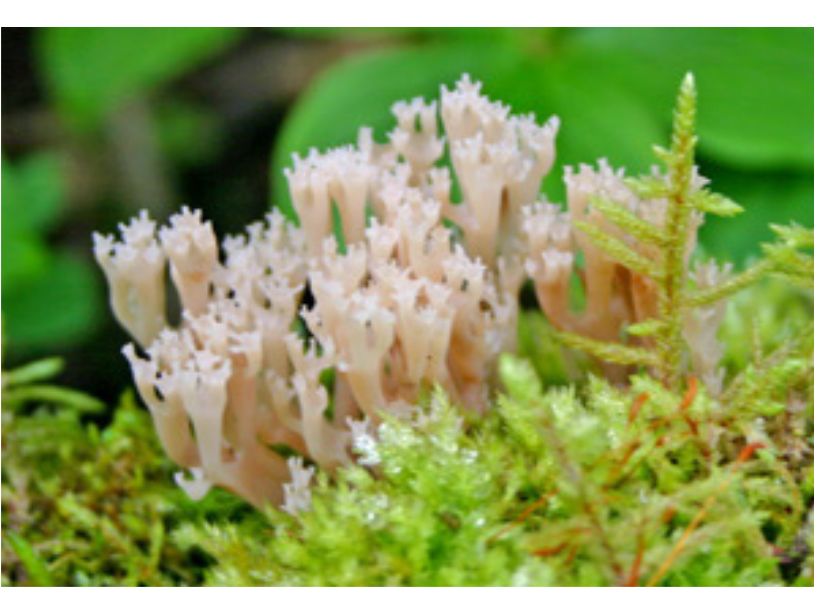
Close-up on a pale pink-white coral like plant growing from a green surface.

A beautiful coral (Ramaria) fungus I found.
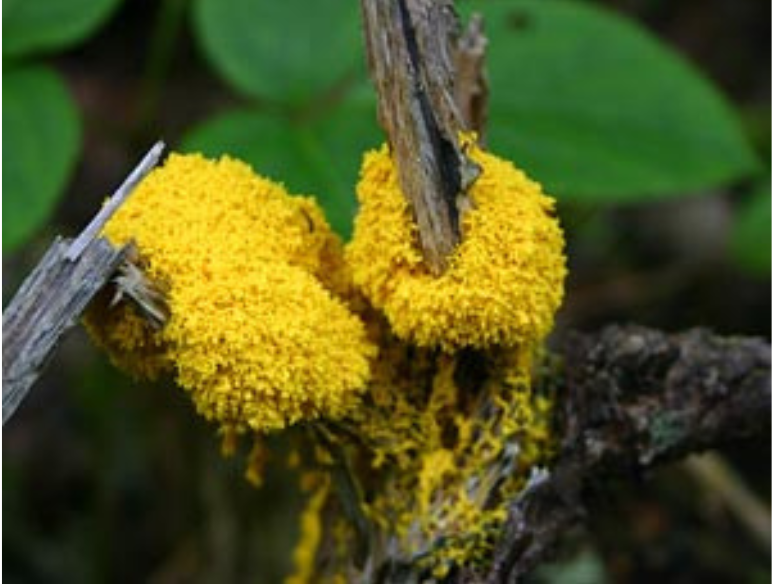
A textured, bright yellow mold growing around a slim branch.

A spectacular slime mold!

Given the choice between being out here and being in my office at the computer, I would much rather be out here. I’ve seen several deer, leopard frogs, a great blue heron, butterflies, lots of birds and a really cool bright yellow slime mold! At night the local pair of loons serenades me to sleep.

Dr. Diana Bizecki Robson

Dr. Diana Bizecki Robson

Curator of Botany

Dr. Bizecki Robson obtained a Master’s Degree in Plant Ecology at the University of Saskatchewan studying rare plants of the mixed grass prairies. After working as an environmental consultant and sessional lecturer…
Meet Dr. Bizecki Robson

Botanical Black Holes

Next week I will be going out to Whiteshell Provincial Park to do some collecting. Why you might ask? I’m trying to fill in Manitoba’s botanical black holes.

While looking through several recent botanical publications I noticed an odd pattern. The Canadian distribution for quite a few species was listed as being: British Columbia, Alberta, Saskatchewan, Ontario, Quebec and Newfoundland but not Manitoba. Since the species’ were found on “rock outcrops in the boreal forest” or “acidic bogs”, a lack of appropriate habitat was probably not the reason why they had not been found here. The answer, quite simply, is that no one has ever collected samples of those species in Manitoba before, even though they are probably quite common. In total, there are at least 74 species of lichens and 85 species of moss that likely occur here, but are undocumented, representing a black hole in our knowledge of the provinces’ biodiversity. If we, as a society, are to protect our nation’s biodiversity we need to know what exists here. Although we know which birds, mammals, fish, amphibians, and reptiles are native to Manitoba, our understanding of the invertebrate, fungal, and botanical diversity is still very incomplete.

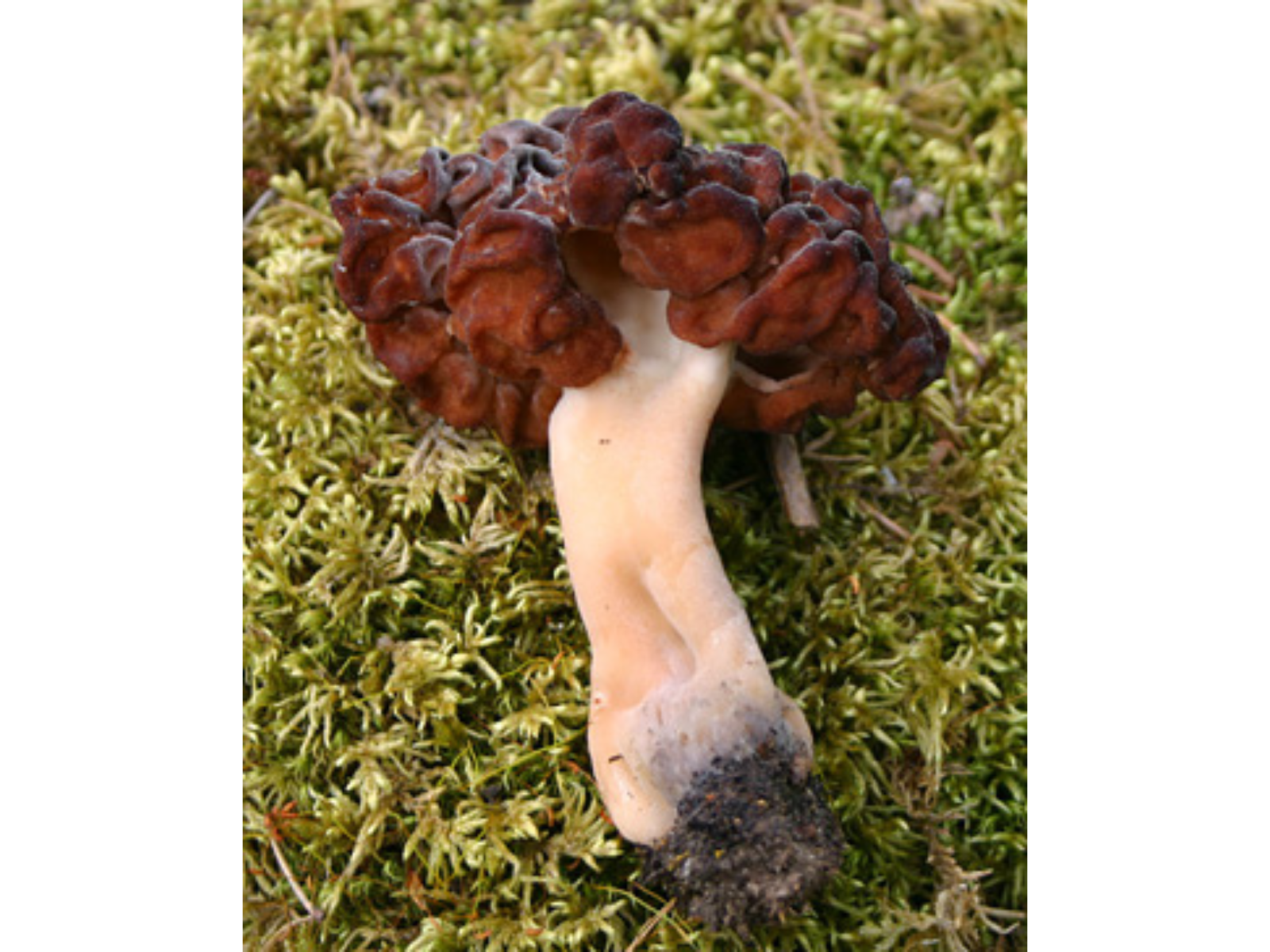
A mushroom with a ridged, brown cap and a light-coloured stem lying on green moss.

The distribution of fungi like this false morel are poorly known.

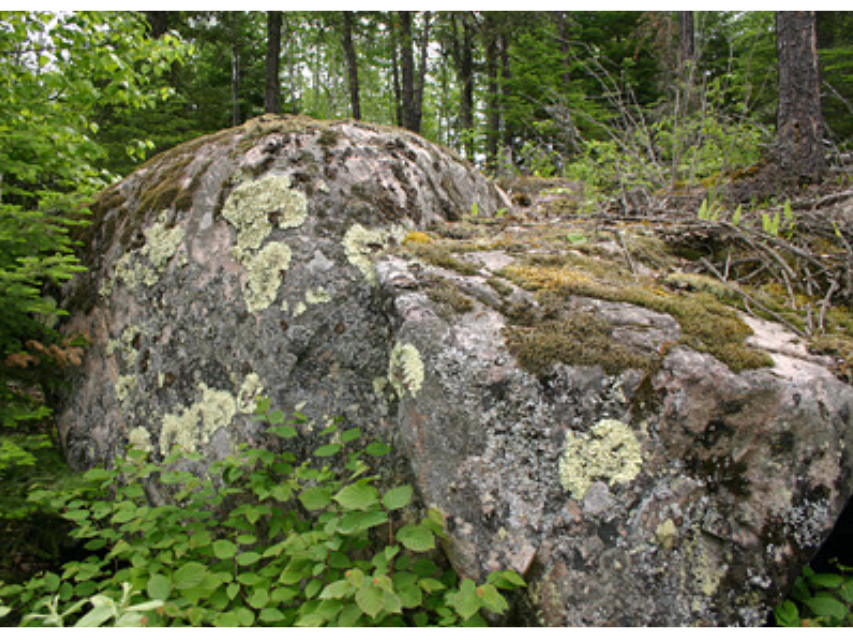
A large rock covered in lichen and mosses in a wooded area.

Rock outcrops are covered with a diverse assemblage of lichens and mosses.

For anyone out there worried that I “kill” plants when I collect them, you can stop worrying. I only collect a single branch with a few flowers and/or fruits, leaving the root system intact and the plant still very much alive. Since the bulk of fungi consist of subterranean “roots” called hyphae, collecting a few mushrooms does not kill the fungi. I do much less damage to wild plants when I collect them than the various wild herbivores do when they eat and trample them. Further, I do not collect any species that are protected under federal or provincial legislation, or that are rare and present in small numbers.

One of my latest endeavours is to try and complete The Manitoba Museum’s botanical collection by obtaining at least one specimen of every species found in the province. In 2008 it was estimated that the Museum possessed slightly less than 83% of all vascular plants, 45% of all lichens, 21% of all bryophytes, 4% of all fungi and less than 1% of all algae. Further, the Museum possesses fewer than five specimens of 45% of our vascular plant species and of most non-vascular plants and fungi. This means that we simply don’t know how widely distributed our native species are or whether their distribution has changed over the years.

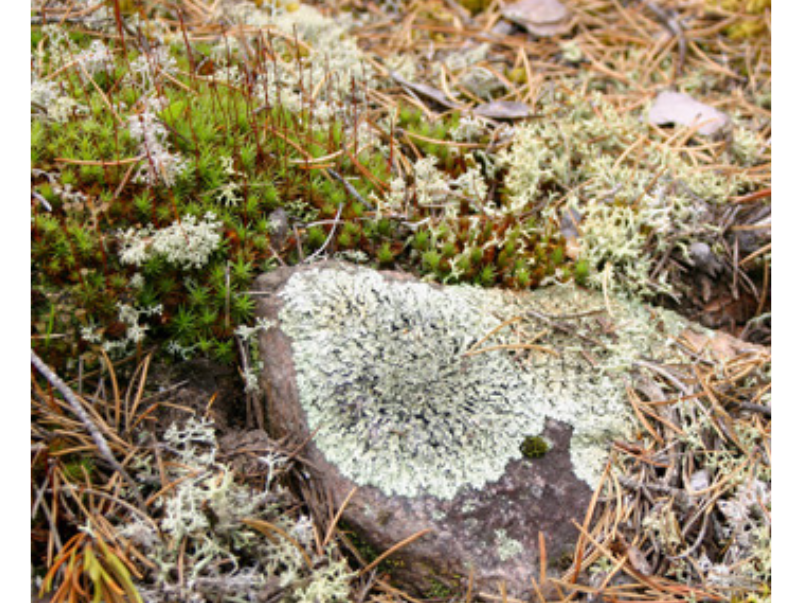
Close-up on a stone with lichen and mosses growing on and next to it.

Lichens and mosses are undercollected in Manitoba.

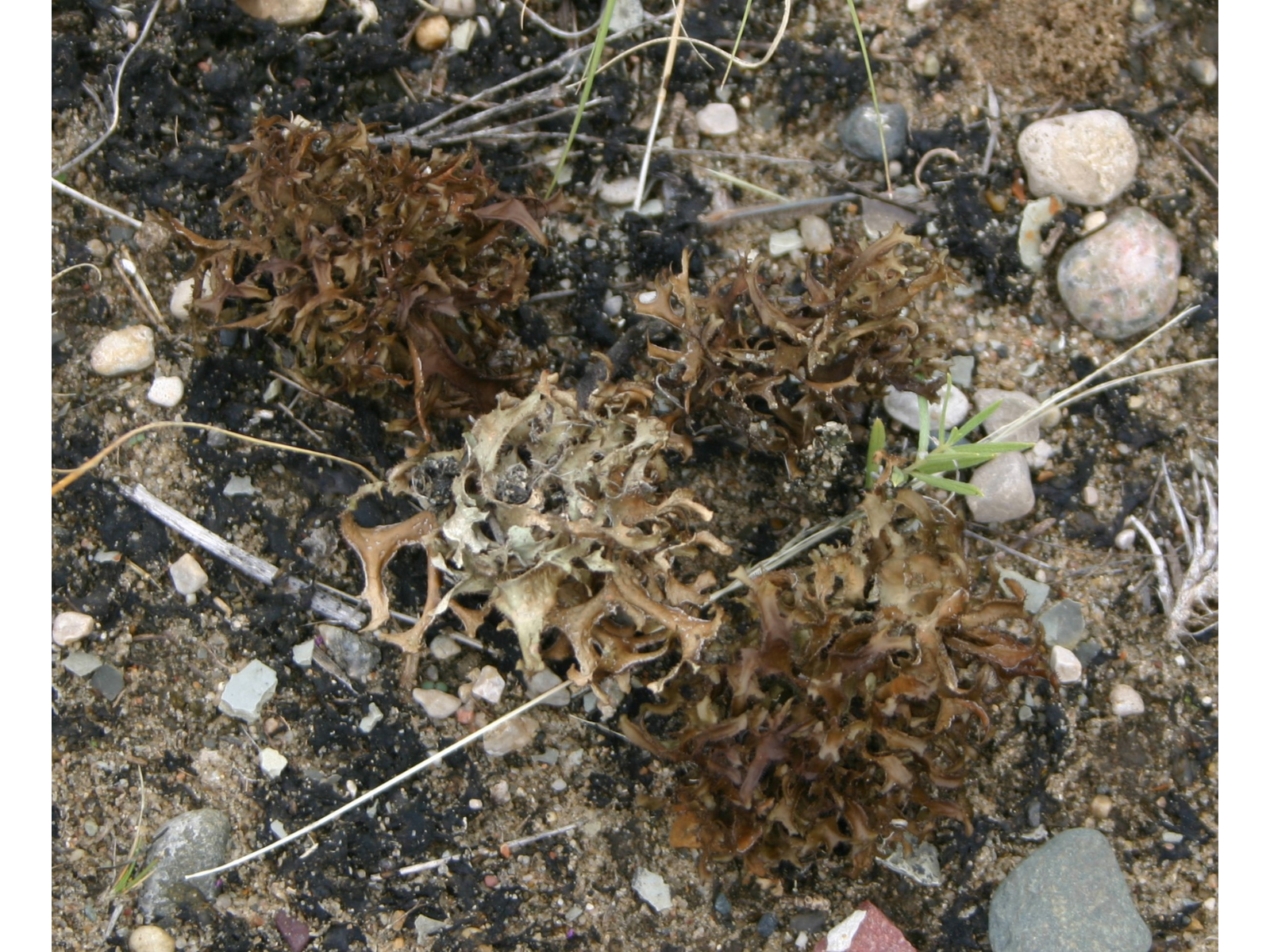
Close up looking down at damp, sandy/rocky soil with lichens and algae growing from it.

Lichens and blue-green algae are early colonizers of bare soil and rock.

The fact of the matter is that this project will likely never be completed during my stint as Curator here. Documenting biodiversity simply isn’t “sexy” enough to attract the large amounts funds that are needed to do the job properly. I would need to spend several months every year hiking around in the bush with a team of field assistants to achieve this goal. Then I would need staff to properly preserve and catalogue the specimens, and additional collection space to store them in. This year I can only spend 13 days in total to do my field collecting. Given the lack of funding to document the provinces’ biodiversity, the most I can expect to do is make the hole a little bit smaller.

Dr. Diana Bizecki Robson

Dr. Diana Bizecki Robson

Curator of Botany

Dr. Bizecki Robson obtained a Master’s Degree in Plant Ecology at the University of Saskatchewan studying rare plants of the mixed grass prairies. After working as an environmental consultant and sessional lecturer…
Meet Dr. Bizecki Robson

Historical Event in Cross Lake

By Kevin Brownlee, past Curator of Archaeology


I recently returned from the community of Cross Lake with a great experience I want to share.

We experimented with cooking a meal inside a replica clay pot over a campfire. It wasn’t until we were cooking that we realized that it has probably been over 300 years since a meal was cooked inside a clay pot in northern Manitoba.

The pot was made by Grant Goltz (Minnesota) copying one from Minnesota that is over 900 years old. Grant generously loaned the pot so we could cook a meal.

You may ask “how is this relevant to archaeology?”. Broken pot sherds are often found at ancient camp sites and we have thousands in the collection in The Manitoba Museum. We were doing experimental archaeology, which is basically trying to see how things were done in the past through experimentation.

In this case we cooked up a meal of moose meat and wild rice. Before we began I worried that the pot may break in the campfire, food would stick and the pot would always boil over. To my surprise the pot did not break, none of the food stuck to the pot and when the pot boiled over once we just moved the fire away from the pot and it kept a gentle boil until the food was cooked.

While the pot we experimented with is a copy from one found in Minnesota the same style of pots are found in Manitoba.

In the end, thirteen of us enjoyed a wonderful meal cooked the old way. Now when any of us talk about pottery found at an archaeological site we can tell people how well these pots cook a meal.

Scientific Hero Worship

Attending conferences can provide scientists with wonderful opportunities to network, develop new insights into natural phenomenon, refine research, and initiate new partnerships. As a Museum professional I also get to visit Museums and develop ideas for new exhibits and programs at my own institution. On the lighter side, scientists also share a few drinks, commiserate with each other (I had my funding cut too!), meet old friends, exchange field stories, and sometimes even get funky on the dance floor after the conference banquet.

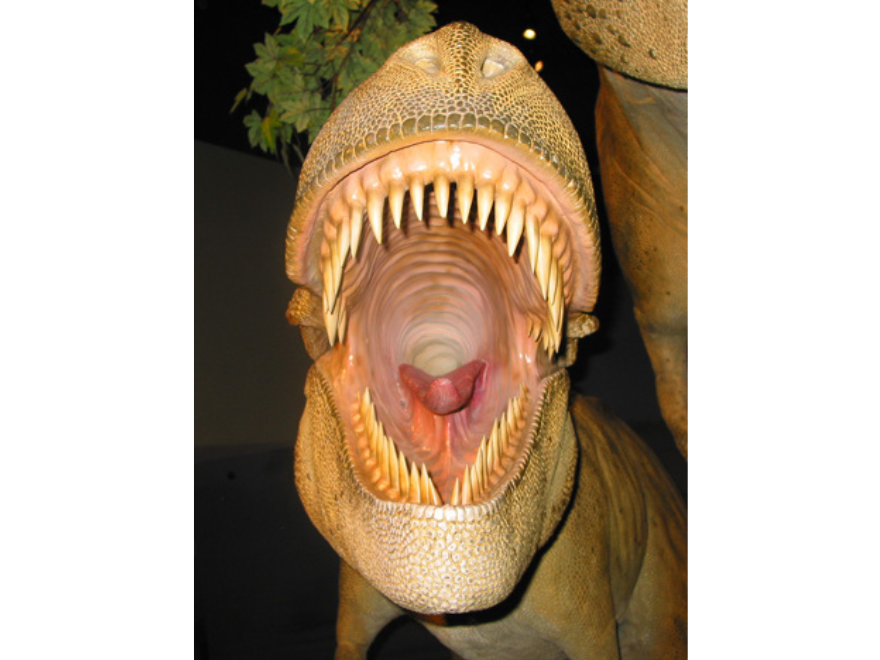
Photo looking into the open mouth of a large T-Rex model.

One of amusing things that goes on at conferences is scientific hero worship. Many a young graduate student has fantasized about meeting a famous scientist, dazzling them with their impressive knowledge of natural history, and then forming a fruitful lifelong research partnership (I’d love to spend three years in the jungles of Borneo collecting plants with you and discovering a cure for cancer). In reality, I suspect that this rarely happens. There’s something about meeting a distinguished scientist that makes young scientists go completely blank.


Image: I was inspired by the new exhibits at the Canadian Museum of Nature.

I got to meet the late Stan Rowe (the Canadian ecologist who wrote “Home Place”) when I was a twenty-something graduate student. Instead of saying something impressive, I smiled and stared at him blankly like I was an imbecile for a few seconds before eventually remembering to ask him to sign my copy of his book. It reminded me of that scene in “A Christmas Story” when Ralphie finally meets Santa but can’t remember that he wants a Red Rider BB Gun for Christmas.

A colleague of mine recounted a similar tale of how he met the late Stephan J. Gould, one of the most famous palaeontologists in the world. He was visiting the field museum over the lunch hour of a conference but didn’t realize they were serving food, instead choosing to drink three bottles of free beer on an empty stomach. It was in this slightly inebriated state he ran in Stephan. Instead of the witty banter that he would have liked to have engaged in with the world’s most preeminent palaeontologist, he muttered something nearly unintelligible and completely forgettable. Ah such is life!

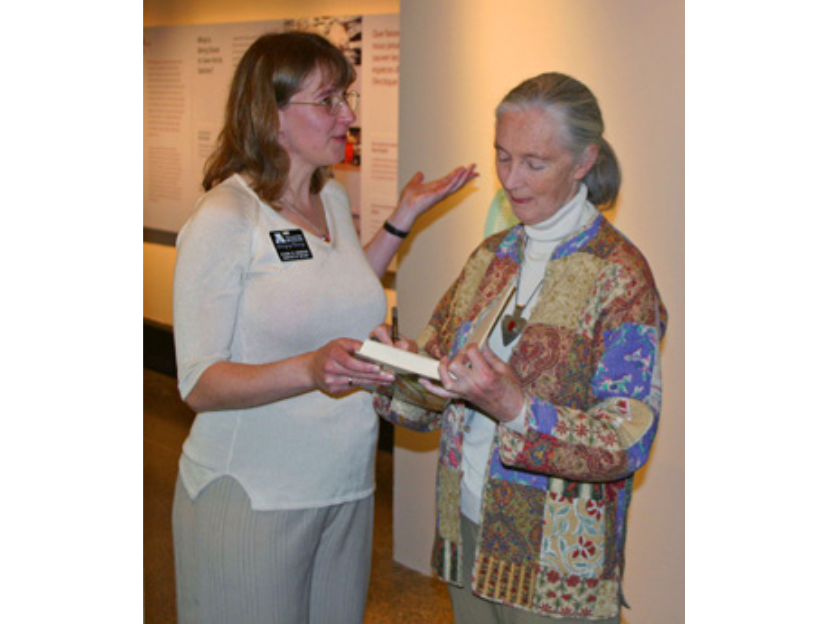
Dr. Diana Bizecki Robson handing a book to Dr. Jane Goodall.

I was reasonably coherent when I met Jane Goodall (she signed my book!).

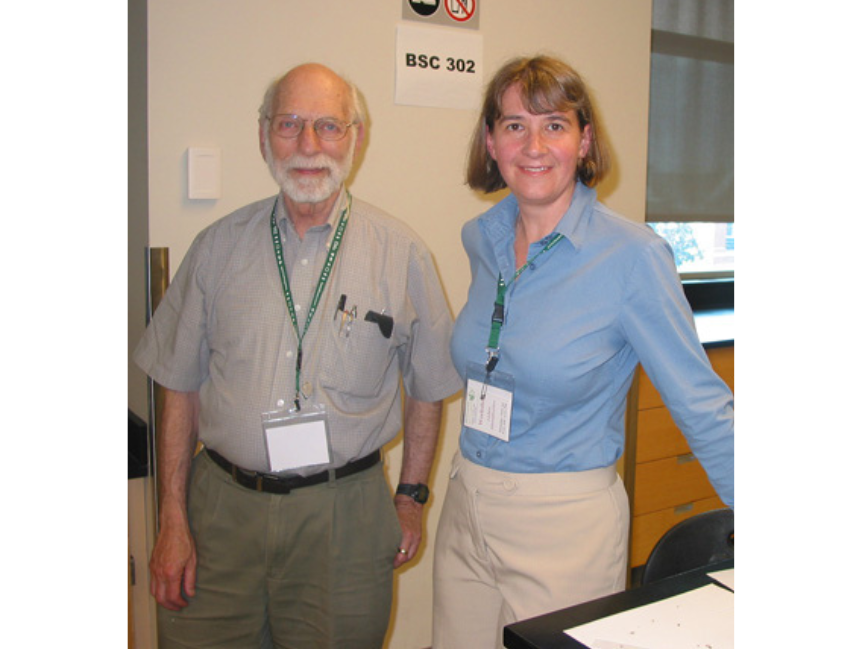
Dr. Diana Bizecki Robson posing for a photo with Dr. Brodo, an older gentleman.

Dr. Brodo helped me learn to identify lichens.

As you get older you clam up a lot less, probably because you actually have some original research of your own to discuss with other scientists. I had a wonderful time chatting with Jane Goodall when she came to the Museum in 2005 for the Chimpanzee exhibit that we hosted. At the Canadian Botanical Association conference this year I was able to meet Irvine Brodo, the Canadian lichenologist that I have admired ever since reading his book on lichens of North America. Who knows? Perhaps one day I’ll know what it’s like to be on the receiving end of the clumsy yet heartfelt admiration that young scientists have for their older colleagues.

Dr. Diana Bizecki Robson

Dr. Diana Bizecki Robson

Curator of Botany

Dr. Bizecki Robson obtained a Master’s Degree in Plant Ecology at the University of Saskatchewan studying rare plants of the mixed grass prairies. After working as an environmental consultant and sessional lecturer…
Meet Dr. Bizecki Robson

Collections in Crisis

Last week I attended the Canadian Botanical Association/Society for the Preservation of Natural History Collections joint conference in our nation’s capitol. I was able to meet Curators and Collection Managers from Museums all over the world, as well as attend a tour of the collections facilities at the Agriculture Canada Central Experimental Farm and the Canadian Museum of Nature.

Just about every person I talked to told me about how they are storing specimens in their hallways due to lack of space, losing knowledgeable Curators and collections staff at their institutions (sometimes only half their original staff is left), and scrounging for funding to digitize their collections and facilitate biodiversity research around the world.

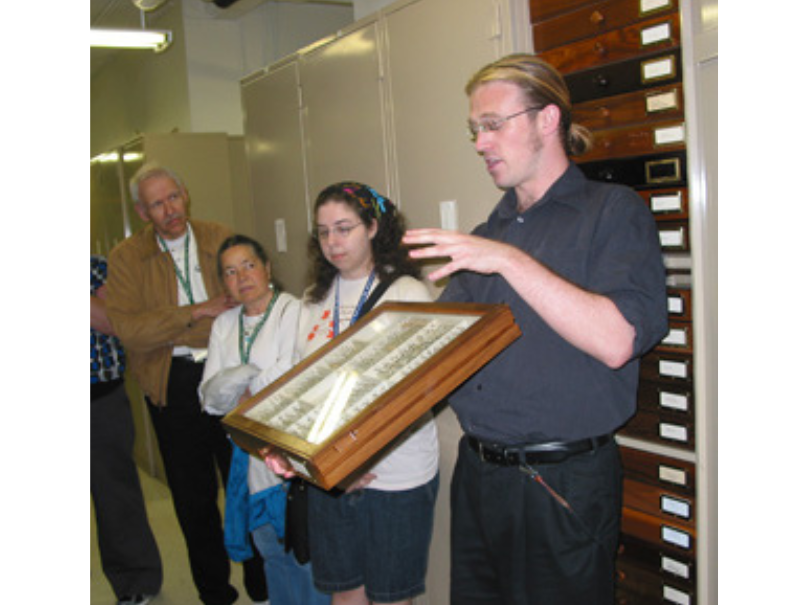
A museum staff person holding up a glass-covered museum storage drawer to a group of people.

Some of the insect specimens at the Experimental Farm have to be stored in the hallway.

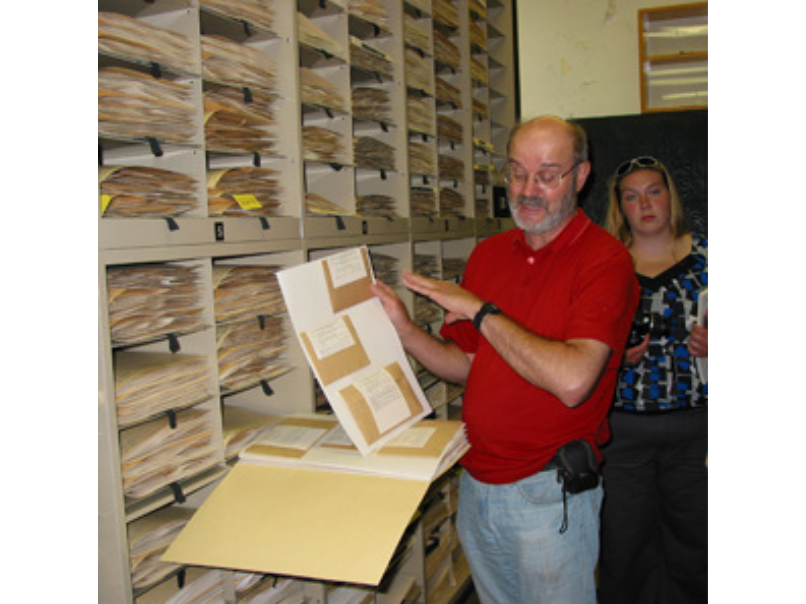
A museum staff person holding up a sheet of specimens from a museum storage drawer.

The fungal collection at the National Mycological Herbarium has not been digitized.

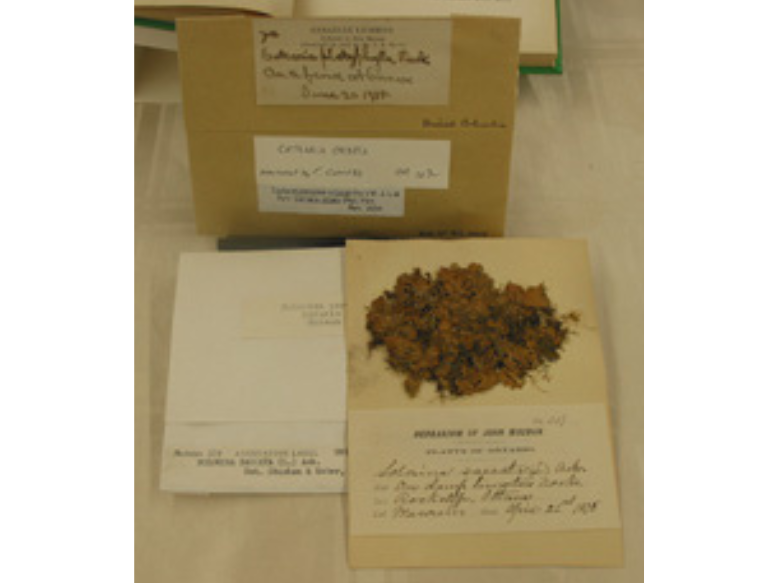
A lichen specimen laid out with collection notes on a sheet of paper in front of a storage bag.

It is ironic that at the period in time when biodiversity is in the most crisis, humanity is cutting the funding of the very people and institutions who know the most about it, and possess the knowledge to conserve it. Or perhaps it is not ironic at all, since we are living at a time when we are more interested in technological innovations than in the species we share our planet with. Most people can identify fewer than 10 native plants but more than 100 corporate logos. Biodiversity is valued less and less as we retreat into our digital worlds, oblivious to and seemingly unaffected by the loss of wild species. This is an extremely dangerous disconnect. After all, iPods don’t make oxygen for us to breathe-plants and protists do. Cell phones don’t cure cancer but plants can. HD-TV’s don’t pollinate the food you eat-animals, mostly insects, do.


Image: This lichen at the Canadian Museum of Nature was collected in 1898 and can help us monitor air quality.

I don’t have a problem with technology per se; I use the internet and e-mail daily, and I record field data using a PDA and a GPS. But lots of people can’t seem to stop using technology (e.g. cell phones) and become blind to everything else around them (e.g. innocent pedestrians). I once heard about a woman who fell into an open manhole because she was too busy sending a text message to actually pay attention to where she was going!

Oscar Wilde once said that “we know the price of everything but the value of nothing.” The fact that so little money is spent on even the most basic biodiversity work (we don’t even know the number of species on the earth within an order of magnitude) suggests that we as a society do not value it at all, even though it is the most valuable thing on earth. Perhaps the ecological and economic catastrophe that BP (and in fact everyone who drives a car) is responsible for in the Gulf of Mexico will help to change our minds about what is truly important: thriving, functioning ecosystems that help to feed and employ millions of people, or cheap oil for our gas-guzzling SUV’s? Subsidies for big corporations or money for scientific research and conservation? The choice is ours to make.

Dr. Diana Bizecki Robson

Dr. Diana Bizecki Robson

Curator of Botany

Dr. Bizecki Robson obtained a Master’s Degree in Plant Ecology at the University of Saskatchewan studying rare plants of the mixed grass prairies. After working as an environmental consultant and sessional lecturer…
Meet Dr. Bizecki Robson