



What's Growing in Storage?

What’s Growing in Storage?

By Lisa May, past Conservator


While perusing the collection in storage Roland Sawatzky, Curator of History, discovered something growing…

Artifacts are donated to The Manitoba Museum from all walks of life. Some may still be in their original packaging, never touched, while others may be very well used. Artifacts, regardless of their overall condition, can be very sensitive to the environments in which they are stored. The museum uses dedicated HVAC units to keep the temperature and humidity of the rooms at conservation standards.

When artifacts arrive at the museum they must acclimatize to their new environment and sometimes this may cause funny things to happen. During Roland’s visit to the storage room he discovered two wooden collar boxes with a strange white substance on them. As he was concerned it was mould growth he brought them immediately to the conservation lab to be assessed.
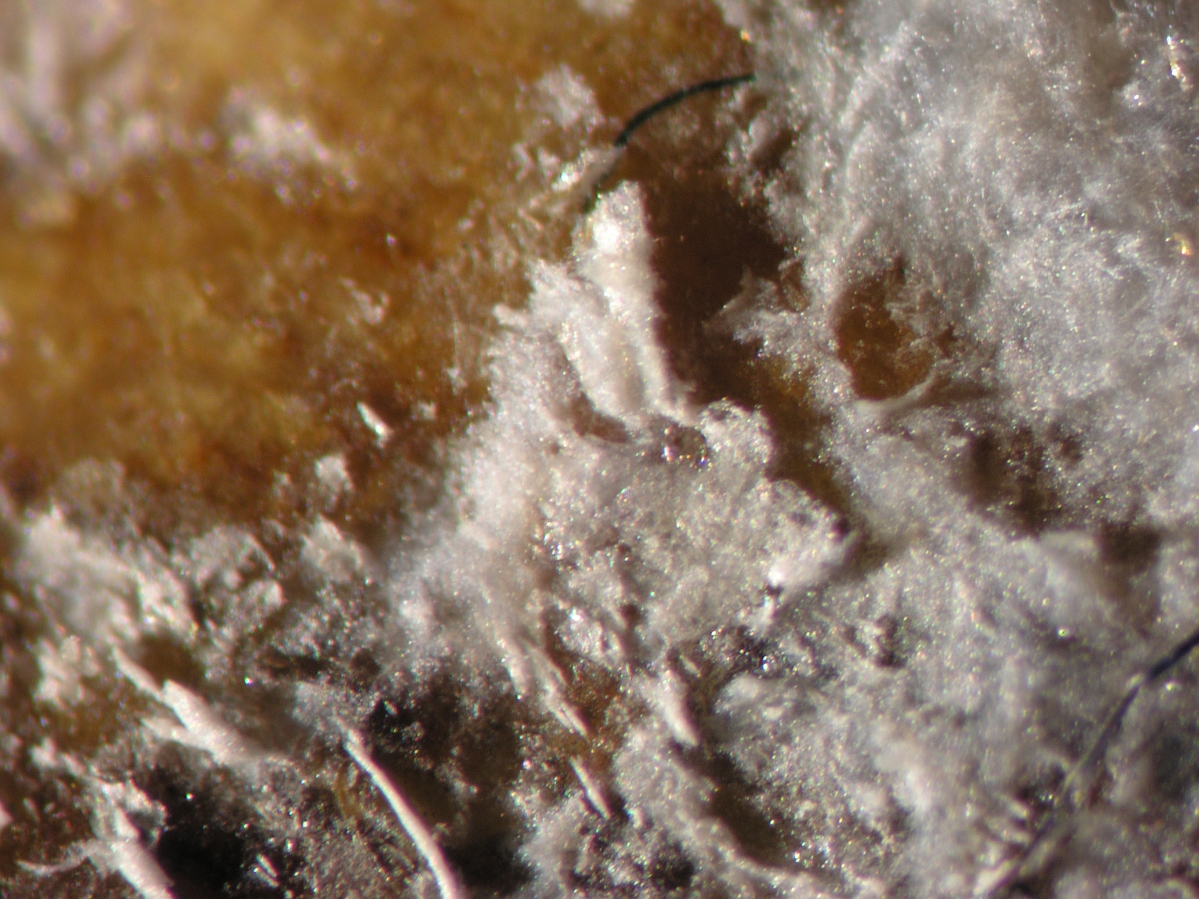
Close up on white crystals growing on a wooden surface.

Closeup image of crystals on the wood surface.
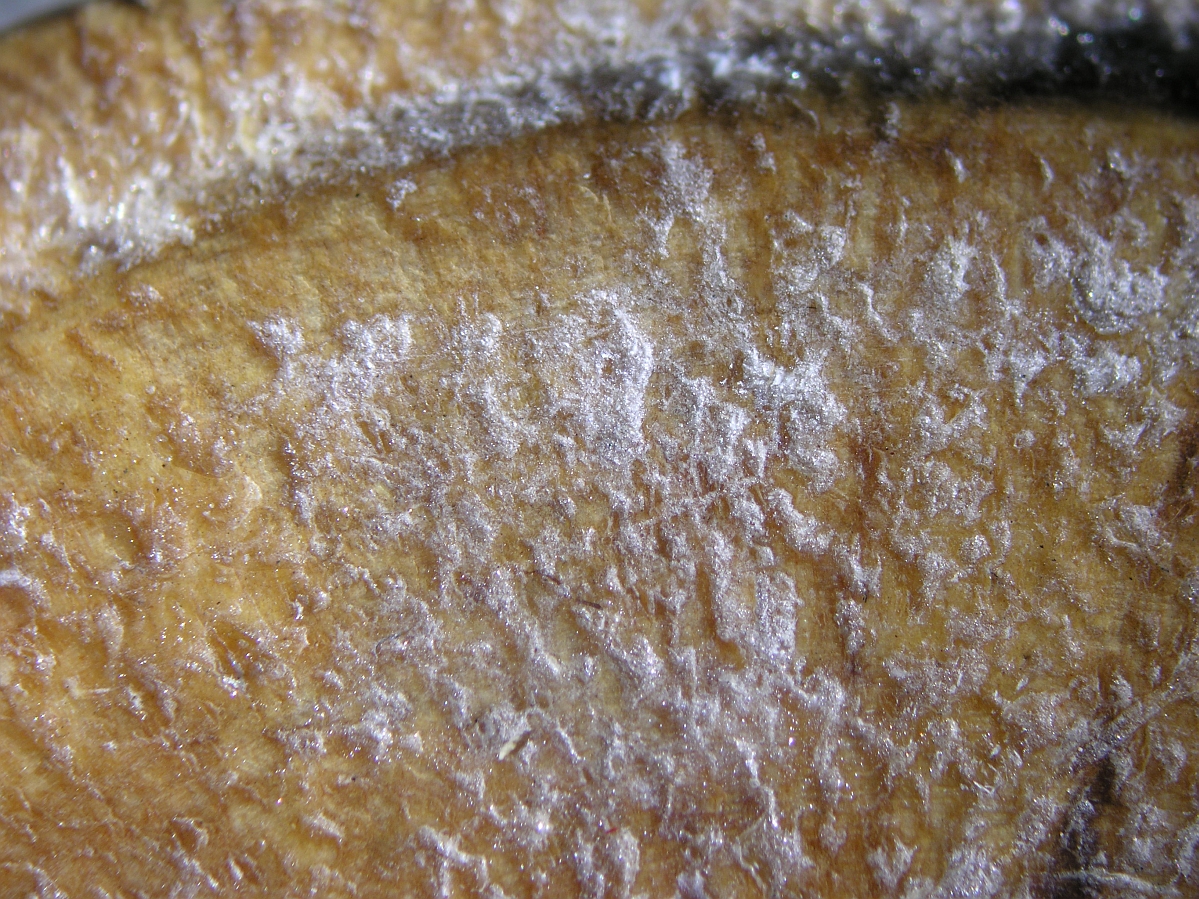
Close up on a white crystalline substance with sparkly flecks inside it.

Another closeup view. It does look similar to mould, but it’s not.

The substance, found not to be mould, was white coloured crystals growing on the finished areas of the wooden boxes. It appeared to be a component within the finish or varnish which had leached to the surfaces. This most likely occurred while the artifacts adapted to their new environment. In this case, the crystals were cleaned from the objects and luckily caused no harm (i.e.: staining) to their surfaces.
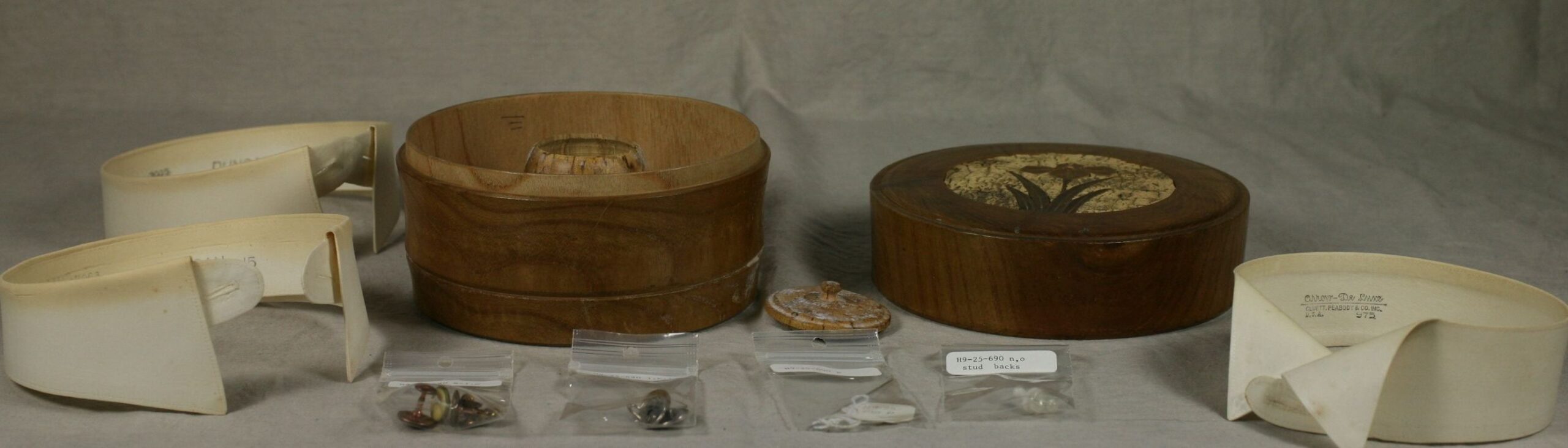
Two wooden collar storage boxes positioned next to three aged-white collars and small baggies with collar studs.

The collar boxes and contents after cleaning.

In the darkness of The Manitoba Museum storage rooms unexpected things can occur in our controlled environmental conditions. Fortunately, with eagle-eyed and talented staff we do our best to resolve issues when they arise so the collection is preserved for future generations to enjoy.
When a Small Thing Means a Lot

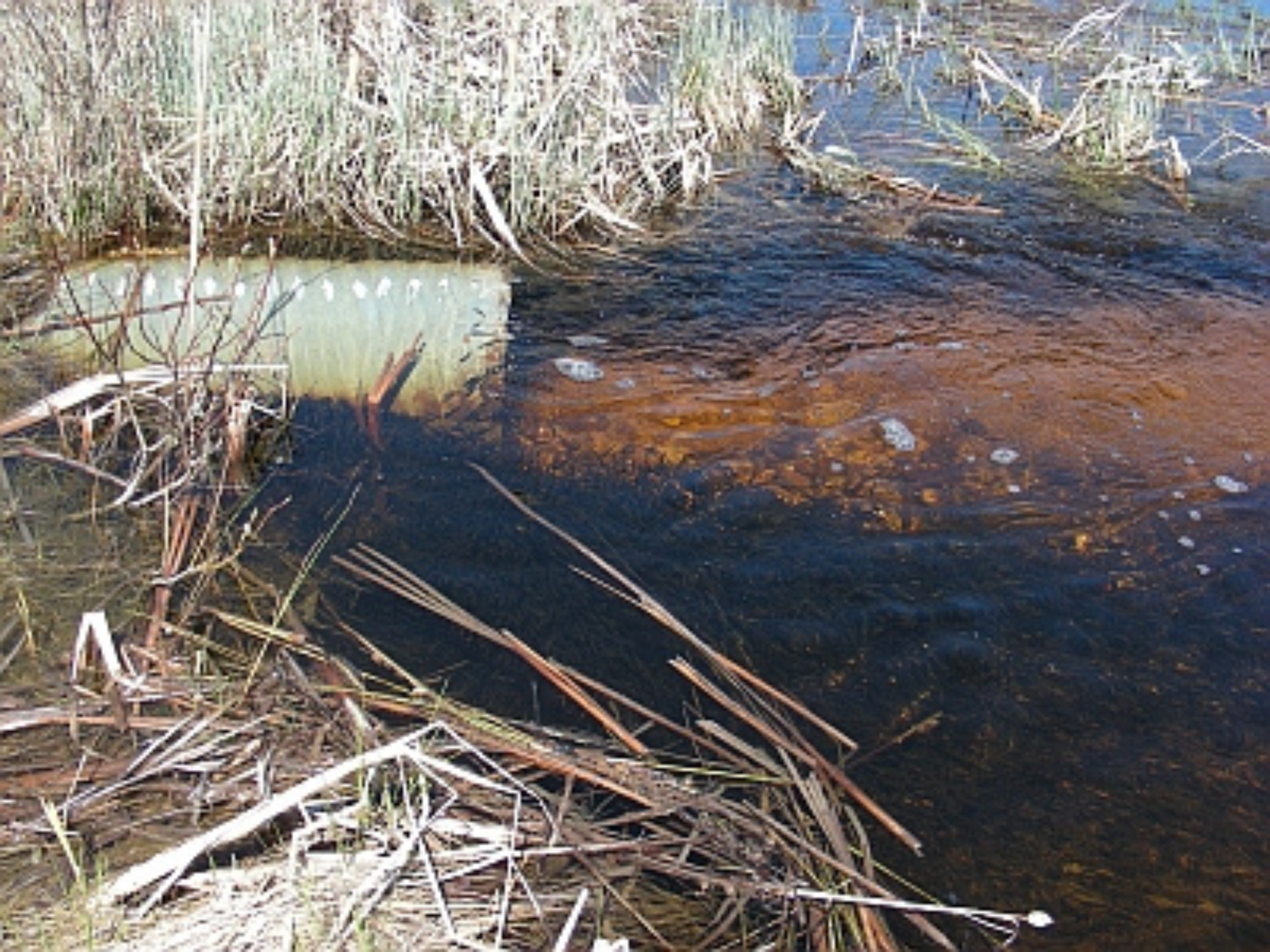
As summer comes to a close, I am finally getting an opportunity to go through some of my fieldwork photos. I ran across this one of a culvert that connected a large marsh with a roadside ditch along Highway 6 just south of Tan Lake  (about 30 kilometres north of St. Martin Junction).

Looking down to a culvert with a school of fish either side of the pipe.

The large dark cloud in the water on either side of the culvert is a school of brook stickleback (Culaea inconstans), a common non-game fish found in ponds, marshes, bogs, and streams across most of Manitoba. In spring, these small fishes (to about 60 mm long) move from larger bodies of water to smaller ones where the females lay eggs in nests built and guarded by the males.

So finding migrating brook sticklebacks is not particularly noteworthy, but from the photos I estimate there are about 8,000 individuals in this one school!! This is an incredible number of fish in a small area. This huge mass of fish got me thinking about the number of small animals that we tend to take for granted. We pay attention to the billions of mosquitoes (although not so many this year!) and the 1.2 million people in Manitoba, but what about the small vertebrates like sticklebacks that don’t seem to have much impact on us?


Image: Clouds of brook sticklebacks in a roadside ditch, May 15 2011.

Brook sticklebacks, like many small fishes, are an annual species, meaning that individuals born one summer are the adult breeders in the next. Very few last more than two summers. This is a huge turnover in biomass – think about that school of 8,000 fishes, and a brand new one of those every year in just that one place! This kind of turnover is very important for nutrient cycling within the ecosystem. These small fishes grow fast and eat a lot of insects and aquatic larvae, and are themselves food for larger fishes, birds and mammals.

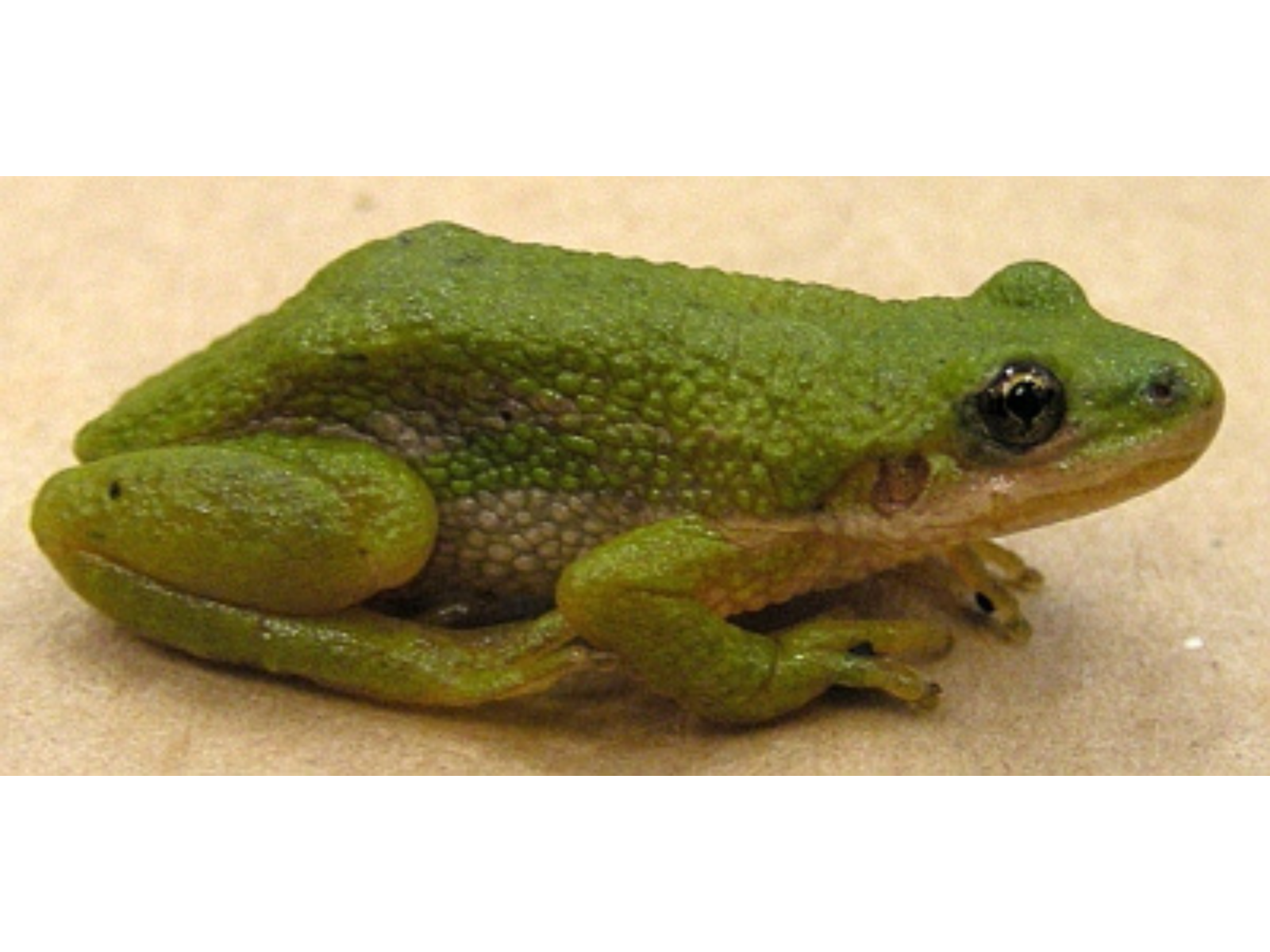
We hear a good many frogs in spring as they call for mates, but tend not to think about them for the rest of the year as they become less noticeable. But they are there all year, and in large numbers. During my fieldwork, I hear boreal chorus frogs (Pseudacris maculata) all along Highway 6. If we take a 50 metre swath on either side of the highway to cover roadside ditches, and conservatively estimate one singing frog for every 500 square metres, that would mean 200 calling frogs for every kilometre of road. Calling frogs are male, so with equal sex ratios we have 400 chorus frogs each kilometre, or about 300,000 chorus frogs in the ditches along Highway 6 from Winnipeg to Thompson! And there are thousands of kilometres of roadside ditches all across the province.

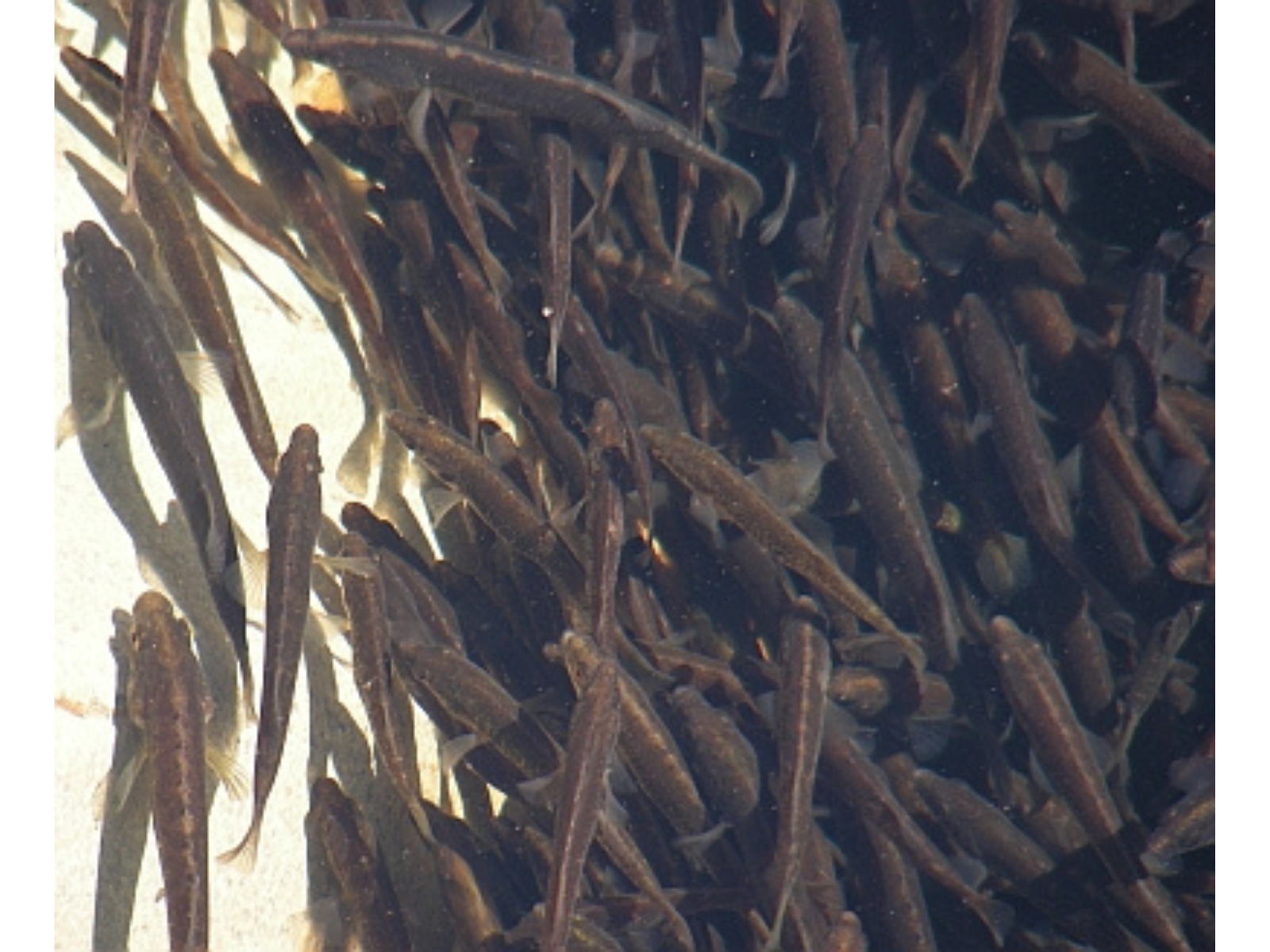
Close-up view of a school of small, thin fish.

Brook stickleback are very common, but many of us don’t know they even exist or we take them for granted.

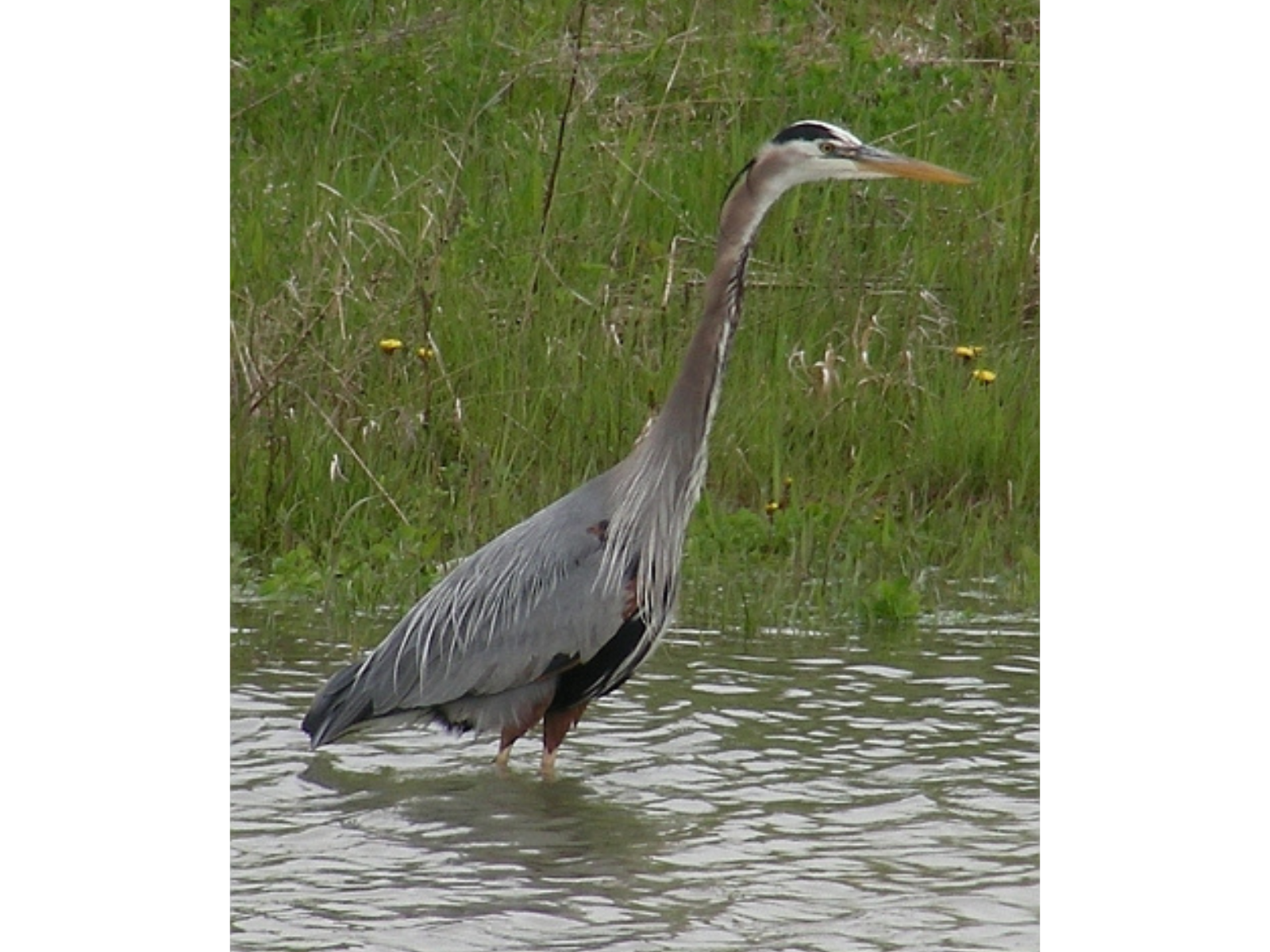
A great blue heron wading in shallow water.

The large numbers of small fishes and frogs cycle nutrients up to more conspicuous top predators like this great blue heron.

If somewhat less than one tenth of the range of boreal chorus frogs in Manitoba is suitable habitat, there are almost 50 billion square metres of chorus frog living space in the province. Even at the conservative estimate of one pair per 500 square metres, there would be almost 100 million chorus frogs in Manitoba! In June, with an additional 100 or more tadpoles per pair, there could be as many as 5 billion individuals in the province’s chorus frog population at its peak. That is a lot of bugs eaten and a lot of food available for other more conspicuous animals that we enjoy in our travels.


Image: A boreal chorus frog from north of Flin Flon. These small frogs (about 25 mm long) are extremely common in Manitoba and come in a variety of colour patterns from green to brown and plain, striped or spotted.

Even if these rough estimates are off by two orders of magnitude, there are still millions of chorus frogs in Manitoba, just as there are additional millions of individuals of other species of frogs and small fishes (like brook stickleback). These under-appreciated, inconspicuous animals in our fields and forests play a huge role in maintaining a functioning environment. Our tiny fishes and frogs are living examples of when a small thing means a lot.

Dr. Randy Mooi

Dr. Randy Mooi

Curator of Zoology

Dr. Mooi received his Ph.D. in zoology from the University of Toronto working on the evolutionary history of coral reef fishes. Following a postdoctoral fellowship in the Division of Fishes of the Smithsonian Institution…
Meet Dr. Randy Mooi

Bright Fireball Seen Across Southern Manitoba

On August 23 at about 9:35 pm, a bright fireball was seen across southern Manitoba and several U.S. States. We are collecting reports of the object to determine where it came from and also where any pieces might have landed. If you say this object, please email us at skyinfo@manitobamuseum.ca with the details.

Please include the following information:

  • Where you were when you saw it;
  • The direction you were facing when you first saw it;
  • Whether the object was moving left-to-right, right-to-left, or up-and-down, and at what angle
  • How high above the horizon it was – use the degree scale, where 0 is the horizon, 90 is straight overhead. So, halfway up the sky is 45 degrees, a third of the way up from the horizon is 30 degrees, etc.
  • Any other details – colour, sound, how long you saw it for, etc.

Your reports can help us track down this object, which was probably a small asteroid burning up in the atmosphere.

Scott Young

Scott Young

Planetarium Astronomer

Scott is the Planetarium Astronomer at the Manitoba Museum, developing astronomy and science programs. He has been an informal science educator for thirty years, working in the planetarium and science centre field both at The Manitoba Museum and also at the Alice G. Wallace Planetarium in Fitchburg, Massachusetts. Scott is an active amateur astronomer and a past-President of the Royal Astronomical Society of Canada.

Guest Column: Churchill

By Dr. Graham Young, past Curator of Palaeontology & Geology


When we got back from Churchill a couple of weeks ago, Debbie Thompson handed me a piece that she felt inspired to write. This was her first visit to the Hudson Bay coast, and as an artist her perspective is quite different from mine.

It’s always depressing leaving a place that fills a void in my soul. There is a solitude here that tugs on my spirit, yearning for acknowledgment

There is a sensual beauty in the eroded and smooth curves of these ancient rocks. There is a harsh beauty reflected in the black spruce. There is a sad beauty in derelict buildings of the past. Forgotten to decay, or to be torn down to reveal a scar. And there is a radiant beauty in the voices of the people here, ringing with a subtle, ancient lightness.

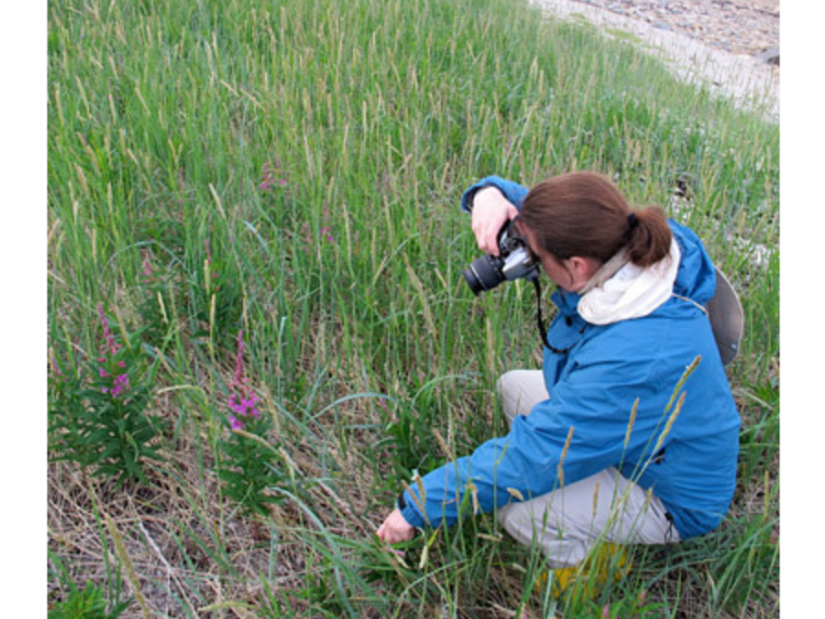
Debbie Thompson wearing a blue jacket and holding a camera up to her eye, crouches to take a photo of the nature in front of her.

Debbie Thompson in her natural element.

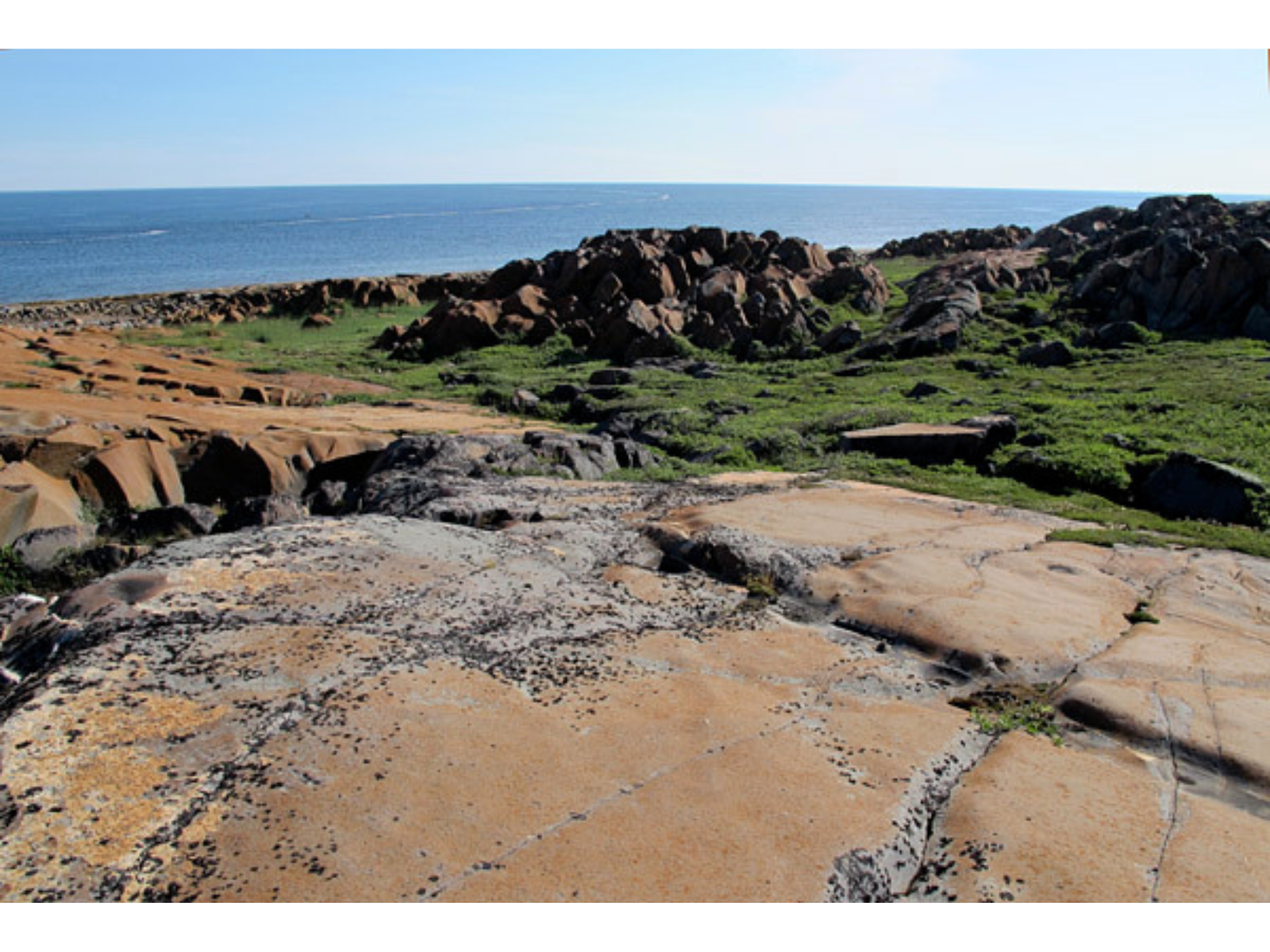
View out over a reddish rocky landscape leading towards a body of water.

Churchill quartzite and Hudson Bay.

The weather is harsh, the insects unflagging, the land unforgiving. But it is beautiful, quiet, and serene when I choose it to be so. There is a different pace up here. It must be the ebb and flow of these ocean tides and the koanic sweeps of bows and bends of timeless rocks. Why rush … nothing else does.

These grey stones, a riddle in form solely, should be a reflection of my soul. They do not change in a day, but over time are never the same. Yet are always present in some form.

That something so beautiful and graceful is birthed of relentless time and the harshest of trials … could not my very essence aspire to such a virtue?

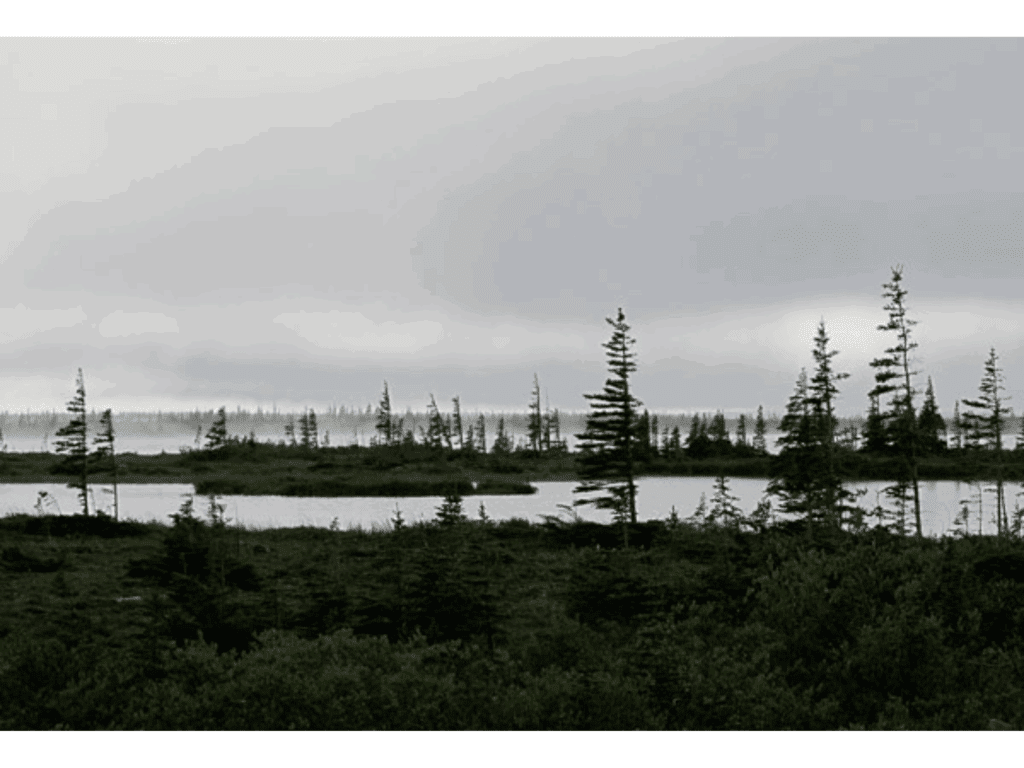
Photo looking out towards a landscape dotted by bodies of water and grass and trees.

Lakes near Bird Cove.

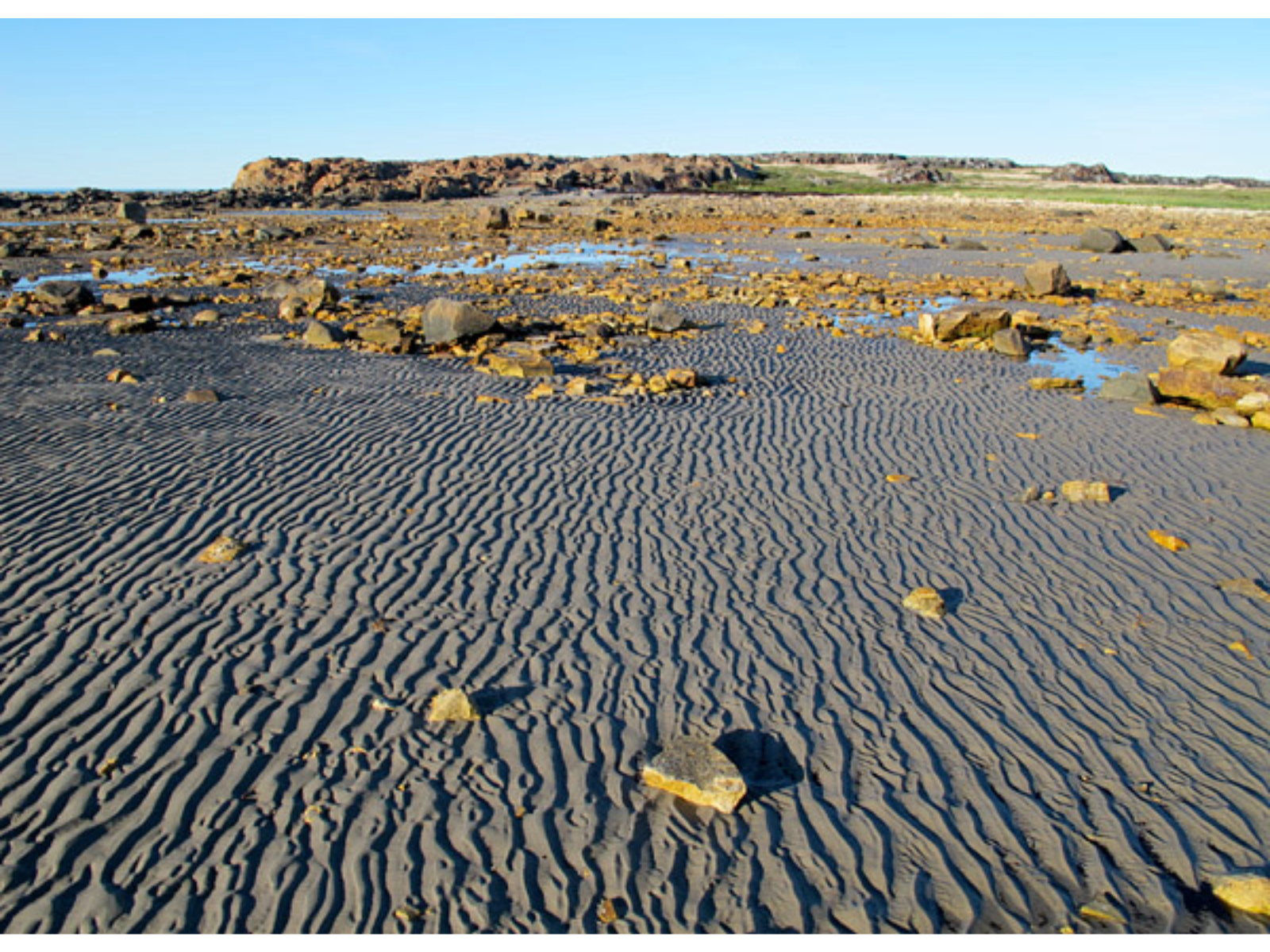
Looking out over a sandy beach dotted with stones and spaces of shallow water.

The shore east of Halfway Point.

(photos by me)

Museum Mystery: Who was Lizzie Crawford?

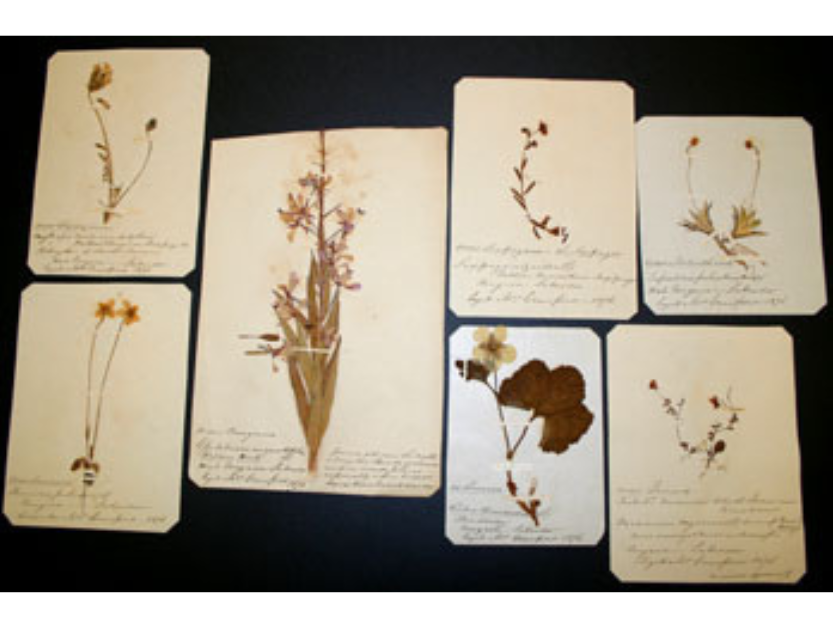
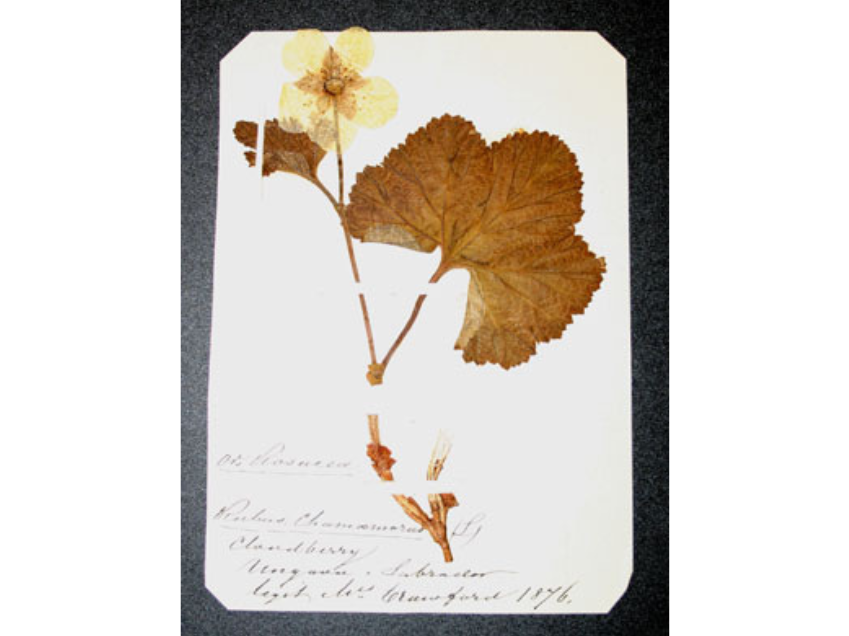
While examining the backlog of uncatalogued plants in my lab I came across a very old and intriguing collection: 28 vascular plants from Ungava, Labrador collected in 1876 by a Mrs. Lizzie Crawford. Immediately my curiosity was aroused. Who was this mysterious woman? Why was she collecting plants in Canada’s north so long ago? How on earth did her specimens end up at the Manitoba Museum? Clearly figuring all this out was going to require some serious detective work.

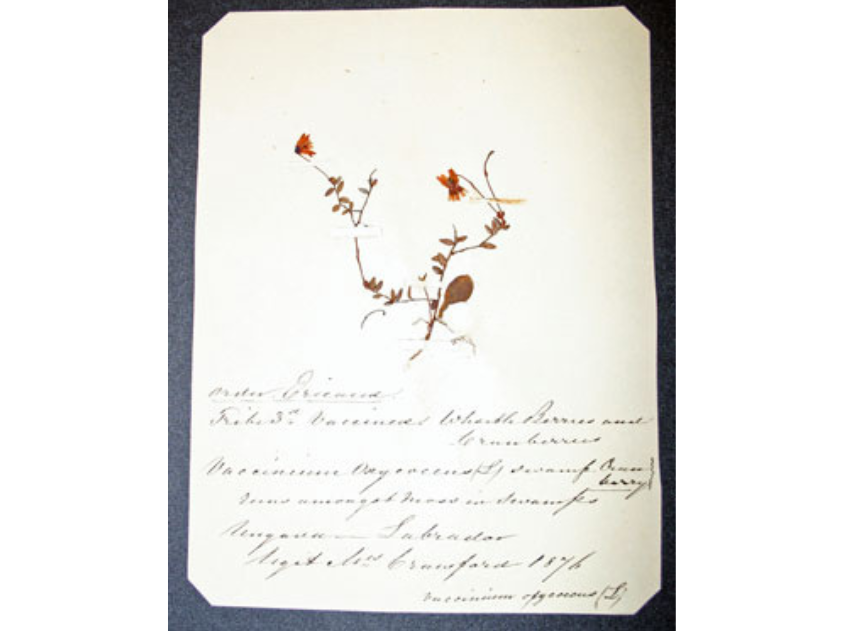
By examining the collection I was able to come to some conclusions about who Mrs. Crawford was and what she was like. First, she was clearly an educated woman as she was both literate (her penmanship is lovely) and able to correctly identify the scientific (Latin) names of the plants she collected. Second, she had access to natural history books and enough leisure time to engage in a hobby, suggesting that her family was somewhat well-off. Third, she was a nature lover and probably a bit of an adventurer. She described the habitat of one plant as being “amongst moss in swamps” so she was probably willing to hike in inhospitable places in search of interesting plants. I surmised that she was probably from an upper-middle class family and that her presence in Labrador was most likely as a visitor or temporary resident. Although her husband was of Scottish ancestry, she is not necessarily Scottish as her maiden name was not indicated.

Seven pressed plant specimens.

Some of Lizzie Crawford’s pressed plants from Labrador.

A pressed plant specimen with handwritten details written on the paper below it.

A specimen of swamp cranberry collected “amongst moss in swamps”.

Next I needed to know a little bit more about the history of Labrador. What kinds of people were living in northern Labrador in 1876? I began searching history publications for information about Scottish immigrants. I determined that there were three likely professions for Mrs. Crawford’s husband: missionary, merchant, or employee of the Hudson’s Bay Company (HBC). I decided to explore the HBC archives since a link to this company might explain how the specimens ended up in Manitoba.

A pressed plant specimen with handwritten details written on the paper below it.

I quickly hit the jackpot: a Robert Crawford had worked for the HBC from 1854-1877, mainly at various forts in Ontario. However, from 1875-1877 he worked at Fort Chimo in the Ungava district of what is now Labrador! This couldn’t be a coincidence; I was sure I had found Lizzie’s husband. I hit a snag however as the Record of Employment (ROE) indicated that his wife was named Mary. Fortunately, there was a question mark after the “Mary(?)” indicating some uncertainty. Maybe the record of employment was wrong. I decided to search Ontario’s marriage records as the ROE indicated that Mr. Crawford’s wife’s family was from Brockville, Ontario. I was able to determine that Robert Crawford married an Elizabeth Miles in 1863. Victory! I was right! I felt like dancing. In fact, I think I did.


Image: A faded but beautiful cloudberry specimen.

A pressed plant specimen with handwritten details written on the paper below it.

Armed with her maiden name I was able to determine that her father also worked for the HBC and was no other than Robert Seaborn Miles, an Englishman who rose to the position of Chief Factor. Her mother was Elizabeth “Betsey” Sinclair who had at one time been the “country wife” of Sir George Simpson, Governor-in-Chief of Rupert’s Land from 1821 to 1860. Country wives were the First Nations or Metis common-law wives of fur traders. In fact, Lizzie had a half sister, named Maria, who had been fathered by Sir George. In another interesting twist, one of Lizzie Crawford’s aunts was Mary (Sinclair) Inkster, wife of John Inkster. The Inkster’s home and general store was one of the first residences in Winnipeg and has been preserved as the Seven Oaks House Museum on Rupertsland Blvd. Therefore, anyone who is related to John and Mary are distant cousins of Lizzie Crawford.


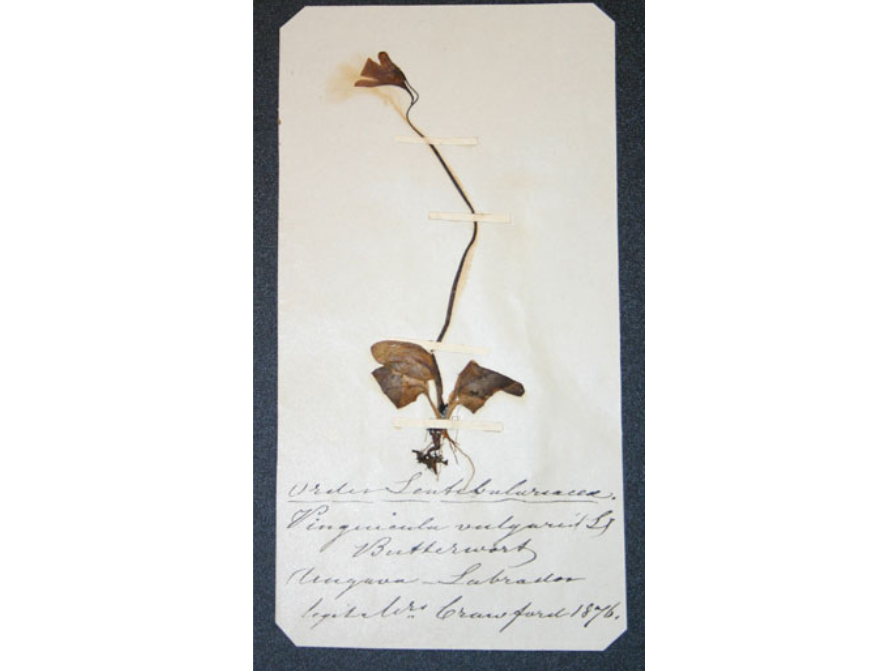
Image: The butterwort (Pinguicula vulgaris) specimen collected by Lizzie Crawford.

So how did the specimens end up at the Manitoba Museum? I needed to track the Crawfords movements after Mr. Crawford retired from the HBC in 1878. Using the internet I was able to find enough documents to piece some of the puzzle together. The Crawfords moved to Indian Head (now part of Saskatchewan) in 1882 to open a general store and Mr. Crawford entered politics, becoming a member of the first council of the Northwest Territories from 1886-1888. During this time the Crawfords may have been involved in the Manitoba Historical and Scientific Society (MHSS), which established in 1879. I suspect that the 28 specimens that I have were given to the MHSS directly by the Crawfords or by their daughter Maggie, eventually ending up here at the Museum. Additional specimens of Mrs. Crawford ended up in herbaria at the University of Montreal and the Canadian Museum of Nature. In fact, Dr. John Macoun (the naturalist with the Geological Survey of Canada), mentioned one of her specimens (Pinguicula vulgaris) in his list of the flora of Labrador in the book “Labrador Coast: A journal of two summer cruises to that region” by A. S. Packard in 1891.

It would be wonderful to find some of Lizzie’s descendants to show them her specimens and also see if they have any old journals, books, letters, or diaries that would tell me more about Lizzie’s collecting activities and why she was interested in natural history. If you are somehow related to Lizzie or Robert Crawford please feel free to get in touch with me as this Museum mystery is still not fully solved.

Dr. Diana Bizecki Robson

Dr. Diana Bizecki Robson

Curator of Botany

Dr. Bizecki Robson obtained a Master’s Degree in Plant Ecology at the University of Saskatchewan studying rare plants of the mixed grass prairies. After working as an environmental consultant and sessional lecturer…
Meet Dr. Bizecki Robson