

The Arizona-Manitoba Connection

For many Manitobans, the only connection we might have with Arizona involves a certain hockey team that left Winnipeg in 1996 for warmer climes. There are, though, other connections that involve organisms from the natural world other than coyotes as mascots!

What possible connection might there be between the Sonoran desert and Manitoba's boreal forest?

I recently returned from a family vacation to southern Arizona where we were hoping to catch up with some of the local bird and lizard specialties, as well as enjoy the truly incredible environment that Sonoran desert has to offer.

Rufous-crowned Sparrow (left) and Chuckwalla (right), special but expected desert denizens.

Although we were a little early because of the mid-March timing forced by the school break, we had several species of hummingbirds, and I finally managed to see roadrunner – a “jinx” bird that I had missed on previous trips.

Southern specialties, a Broad-billed Hummingbird (left) and an Ash-throated Flycatcher (right).

But these were desert species we were expecting. For me, the strangest sight among all our bird observations was finding boreal and subarctic species of sparrows hopping among the cacti! In retrospect, I suppose I shouldn’t have been surprised – I know these species overwinter and migrate through the southern United States, including Arizona. And a few of Manitoba’s northern species have populations that breed in the mountainous areas of the south. Still, it came as a bit of a shock while tracking down Arizona desert specialities to instead run across White-crowned and Lincoln’s Sparrows that will be migrating through my backyard in less than a month! I hadn’t travelled all the way to Tucson to see them!

Lincoln's Sparrow (left) and White-crowned Sparrow (right), two species that occur in Manitoba but spend time in the Arizona desert, along with (occasionally) Manitoba Museum zoology curators.

The more I thought about it, though, I began to have a grudging respect for these common Manitoba species that kept showing up under prickly pears and organ pipe cactus. Many of the Arizona specialties basically hang out in desert all the time, whereas “our” migratory sparrows have to be able to deal with a huge range of habitat and conditions, from boreal and subarctic to desert. When we travel from north to south and are scrounging for food, we are relieved to find familiar forage in local produce stores carrying recognizable brands; these little sparrows manage to scratch up a meal whether under a saguaro cactus in a desert or a spruce tree in a bog – no shared seed or insect ‘brands’ between those localities.

A White-crowned Sparrow nest found in July 2008 at Nueltin Lake, Manitoba near the border with Nunavut, a long way and a very different place than the Arizona desert where they spend part of the non-breeding season. An arrow points to the well-concealed nest in subarctic scrub (left), and the nest with four eggs revealed (right).

So the Arizona/Manitoba connection runs deep on many fronts. Much as humans find a way to chase a puck in the frozen north and the Phoenix desert, our sparrows manage to raise a family in the north every summer and eke out a living in the desert in winter.  But unlike the puck chasers, the sparrows haven’t decided to move down to Arizona permanently.

The Bluebird of Halfiness?

A recent web-based discussion about the identification of an odd-coloured bluebird reminded me of a similar odd bluebird in the Museum collections. There are three bluebird species in North America: Eastern, Western, and Mountain. Contrary to what one might expect from their names, Manitoba is home to the Eastern and Mountain Bluebird, the Western being found in Canada only on the other side of the Rockies from us.

As early as John James Audubon, the famous 19th century wildlife artist, three species of bluebirds were recognized. Left, Eastern Bluebird, middle top right, Mountain Bluebird (Arctic Bluebird to Audubon), and right, Western Bluebird.

Males and females have different plumages in each species, but at least the males of all three species are quite easy to tell apart when the birds follow the rules and look like the picture in the book (or on the App, as the case may be!) and live where the maps say they must. But, as with so many organisms, variation is the rule, and sometimes things just don’t look quite as they should or show up where they should. That’s why so many people are interested in looking at birds (or insects, or almost any natural organism); they are endlessly varied and can sometimes make unexpected appearances.

What does this have to do with Museum collections? Because of that amazing variation, the specimens held in a museum are very useful for comparison and the museum collections themselves are a good place to deposit unusual specimens that might need a harder look later. Bluebirds are a good case in point. In the late 1960′s, an ardent bluebird worker in Manitoba, John Lane, found a very strange-looking male bird at one of his nest boxes. Its coloration suggested a hybrid between an Eastern and a Mountain Bluebird. Hybrids among bluebirds were not known at this time, and this was rare enough that he got in contact with the Museum and the unusual step was taken to collect the apparent hybrid, its Mountain Bluebird mate, and raise the young in captivity (for more details, see an article by John Lane in The Blue Jay, 1969, pages 18-21).

A ventral (belly) view of: top, Mountain Bluebird (Sialia currucoides) (MM 1.2-898); middle, possible hybrid (MM 1.2-2486); bottom, Eastern Bluebird (S. sialis) (MM 1.2-1385). Note the blue throat of the possible hybrid with some rusty spots on the breast, and that it is intermediate in size.

The hybrid male bird is certainly strangely-coloured. It has the quality of blue of an Eastern Bluebird, but rather than the typical rusty-orange throat and breast of this species, these areas are mostly blue, similar to the pattern of a male Mountain Bluebird. There are, however, some dashes of reddish mixed in. A look at the back shows the difference in blue colour of the Mountain Bluebird and the possible hybrid and Eastern birds.

Dorsal (back) view of the same birds as the previous image with Mountain Bluebird above, hybrid middle, and Eastern Bluebird below. Note the quality of the blue is similar between the two lower specimens. Also note that the length of the wings and tail of the possible hybrid are intermediate.

The bluebird species also vary in size, although with overlap. Once the potential hybrid was at the Museum, measurements could be made to see where it might fit. As an example, wing length (measured officially as ‘wing chord’) for male Easterns ranges from 95-105 mm and for male Mountains ranges from 108-121 mm. The hybrid’s wing length, at 104.5 mm is at the high end of Eastern, but nowhere near the Mountain Bluebird size range. This same pattern holds for other measurements.

One possibility not considered by Lane is that the odd-coloured bluebird might be a hybrid of Western and Mountain. Western Bluebirds have a blue throat with an orange breast, and are slightly larger than Eastern Bluebirds, making the measurements fit that species. The blue breast of the hybrid would be the possible Mountain parent contribution. One issue with this is that Western Bluebirds usually have a rusty-orange patch on their shoulder or back, absent on the possible hybrid.

There is one more way that the hybridization question might be resolved with the Museum specimen. Dried skins, like these birds, can provide samples of DNA, the molecules that are the instructions for building and operating living things. Just as human DNA samples can identify a particular person or determine to whom they are related, animal DNA can be used to identify parentage. Perhaps a biologist interested in bluebirds will one day run a sample of DNA and help to solve which species might have hybridized to make our strange specimen.

But without the specimen in a museum collection, we would never have the chance to check.


A valuable feather in the Museum’s “cap”

As curators of some sizeable collections (>100,000 in Zoology alone), we are frequently asked what the most valuable specimen or most important one among them might be. Certainly, the collection contains several items that are “one-ofs”, or are the biggest, or most colourful, or even worth a good deal of money in the marketplace. But value, like beauty, is in the eye of the beholder.

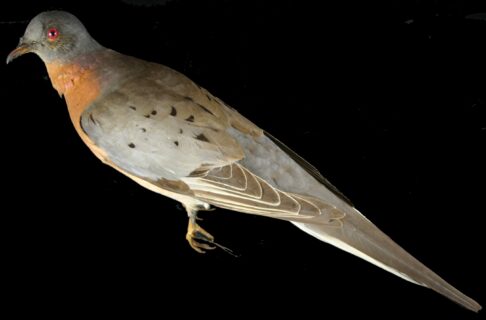
Who is to say if a specimen of Passenger Pigeon (Ectopistes migratorius) (MM 3.6-887), a species extinct since 1914, is more valuable than one of the tiny Lake Winnipeg snail (Physella winnipegensis) (MM 2.4-6514), a disputed species found only in Manitoba?

We recently received a request for a few feathers off of a single specimen of Ivory Gull (Pagophila eburnea) collected north of The Pas in 1926, the only specimen we have of this species. The Ivory Gull is a High Arctic breeder that has made an appearance in Manitoba only about a dozen times in the last 100 years. The species is listed as Endangered in Canada and its populations are declining. A research group is examining levels of mercury and stable isotopes of carbon and nitrogen in feathers to investigate the possible role of heavy metal contamination and changes in foraging behaviour in Ivory Gull decline. The Manitoba Museum specimen is one of only about 150 specimens from Canada in all the museums of North America, and its age makes it particularly valuable for reconstructing historic levels of contamination and isotopes. Who could have predicted the value of this Museum specimen for conservation of the species when it was collected those many years ago?

Our Ivory Gull specimen (Pagophila eburnea) (MM 1.2-941) from north of The Pas, collected in 1926. Feathers from this specimen can help determine historical levels of pollutants and ratios of stable isotopes can determine feeding ecology.

By sharing information on Museum rarities with researchers who can pool data from the few specimens available in collections from around the world, we learn more about the biology of the organism, making the specimen more ‘valuable’ in terms of information and helping conservation efforts. The Museum ends up with another story to tell about its collection and about the animals themselves. Science, the Museum, and, most importantly, the animal will all win from this exchange.

Nature generally can be understood through patterns. Unique observations, like a rare gull found north of The Pas in 1926, are curiosities, but can’t contribute very much to the bigger picture as an isolated event. Even the proverbial apple clunking onto Newton’s head, though important as a unique event, only becomes truly valuable when its act of falling towards Earth can be generalized to explain why other things also fall.

The Museum collections often include several specimens of the same species to include examples of males, females, and juveniles during different times of the year, different locations, and different decades.

This helps to explain why the Museum has, when possible, more than one example of a species, and continues to grow collections through active collecting. Just as a single letter is more as a part of a word, or a word is more meaningful when put into a sentence, a specimen becomes more in the context of a collection. A particular specimen does have value in and of itself as a record of occurrence in a single place at a single moment (called a voucher), or sometimes even has monetary value. But several specimens from different places collected at different times provide a more complete story of species variability, distribution, biology, and, as in the case of Ivory Gull mercury levels, how these might have changed over time and space. Each individual provides a data point, and an important one, but the real value comes from the collection as a whole. And a new specimen added to the collection today, while not necessarily individually significant right now, might be so 100 years from now, just as the Ivory Gull specimen collected in 1926 is valuable today.

These drawers of dozens of the same species of mouse are waiting patiently to tell their story of change over time; change in distribution, ecology, and other aspects of biology.

Richard Fortey (a paleontologist at The Natural History Museum, London) suggested that natural history museums are the archives of the Earth, an apt metaphor. Through their collections, museums document individual “events” as specimens, which together tell the story of how our natural world changes over time. The Manitoba Museum plays this critical role as natural history archive for the province. Specimens old and new are together a feather in our collective cap.

Anniversary for a Museum Outlaw

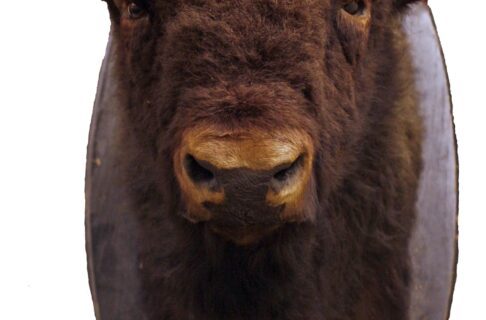
Just outside my office on the 4th floor of the Museum is a big, hairy outlaw that can stare anybody down. It’s the mounted head of one of the original ‘outlaw buffalo’ of the Pablo/Allard herd of Plains Bison (Bison bison bison), the most significant of the private herds purchased by the Canadian government that helped to bring these magnificent animals back from the brink of extinction.

The 4th floor Museum 'outlaw', an original member of the Pablo/Allard bison herd, but one of several that refused to be driven into a train boxcar for shipping and was shot for its obstinance. Times have changed, we'd like to think.

The 4th floor Museum 'outlaw', an original member of the Pablo/Allard bison herd, but one of several that refused to be driven into a train boxcar for shipping and was shot for its obstinance. Times have changed, we'd like to think.

By 1890, it is believed that there were no bison remaining in Canada. Several private herds started from wild stock during the 1870s were obtained by the Canada government beginning in 1897. The Pablo/Allard herd, the origin of the Museum ‘outlaw’, had its beginnings in about 1872 when Walking Coyote, a member of the Pend d’Oreille First Nation, captured a handful of animals south of the Alberta/Montana border. About a dozen offspring of this group were purchased by Pablo and Allard in 1883 and augmented with others purchased from other private owners some ten years later. When protected and left to their own devices, this bison herd became quite large.

The New York Times headline of January 22, 1911 reporting the culling of the 'outlaw' bison.

The New York Times headline of January 22, 1911 reporting the culling of the 'outlaw' bison.

Michel Pablo rounded up his bison in Montana, loaded them onto boxcars and sent over 700 to Canada between 1907 and 1914. However, there were a few individuals that were too wild and managed to escape. In early 1911, in what was billed by the The New York Times in January that year as “the last big buffalo hunt in the history of the world,” Pablo hunted down and shot these ‘outlaw’ bison. The metal plaque on the Museum hallway head clearly identifies it as a member of Pablo’s ‘outlaw’ herd.

The metal plate identifying the Museum bison head as an 'outlaw buffalo' of the Pablo herd.

The metal plate identifying the Museum bison head as an 'outlaw buffalo' of the Pablo herd.

I mentioned the Museum bison head mount to a volunteer in Geology and Paleontology, Dr. Jim Burns, who has a fascination with Winnipeg history. He brought to my attention a photograph he had researched that showed 11 bison heads lined up on Main Street in 1911, apparently from that famous last hunt by Pablo (see Burns, J.A. 2010. Edward Darbey, taxidermy, and the last buffaloes. Manitoba History, 63:40-41). It seems that a number of these animals had made their way to a well-respected Winnipeg taxidermist, Edward Darbey. Born in St. Thomas, Ontario in 1872, Darbey came to Winnipeg at the age of 15. In 1898 he purchased the taxidermy shop on Main Street that is the backdrop to the bison skulls in the photo. By 1902, Darbey had been appointed as the “Official Taxidermist of the Manitoba Government,” an odd title by today’s standards, but one that made sense at the time when animal mounts were frequently used to decorate public buildings.

Eleven bison skulls outside Edward Darbey's taxidermy shop on Main Street in Winnipeg, mid-1911. Photo courtesy of the Archives of Manitoba through J.A. Burns.

Eleven bison skulls outside Edward Darbey's taxidermy shop on Main Street in Winnipeg, mid-1911. Photo courtesy of the Archives of Manitoba through J.A. Burns.

The Pablo bison were hunted in early 1911, the bison head and taxidermy shop photo was dated by Dr. Burns to around mid-1911, and there is record of a Winnipeg auction of bison head mounts and capes in late November, 1911. According to the plaque on our Museum mount, it became property of the City of Winnipeg in 1912, a reasonable date to link it with the somewhat gruesome Main Street display.

A close-up of the horns of one of the skulls from the 1911 Main Street photograph. Enhancing images like this provided a way to compare the horns of the undressed skulls with that of the Museum head mount to see if it could have been one of these animals.

A close-up of the horns of one of the skulls from the 1911 Main Street photograph. Enhancing images like this provided a way to compare the horns of the undressed skulls with that of the Museum head mount to see if it could have been one of these animals.

Enlarged images of the undressed skulls in the old photo show distinctive patterns on the horns. I spent some time photographing the horns of the hallway ‘outlaw’ at similar angles to those of the 1911 photograph. From careful comparison, I am reasonably certain that there is a match for our 4th floor ‘outlaw’ – skull #5, second from the right in the back row of the Main Street photo (just right of the bottom of the door to the shop). The numbers on the skulls likely linked them with the appropriate skins for later mounting.

A comparison of the left horn of skull #5 from the 1911 photograph (left) with the left horn of the Museum 'outlaw' mount. Although difficult to discern on the low resolution images here, patterns on each of these horns and also the right horns are strikingly similar, suggesting a match.

A comparison of the left horn of skull #5 from the 1911 photograph (left) with the left horn of the Museum 'outlaw' mount. Although difficult to discern on the low resolution images here, patterns on each of these horns and also the right horns are strikingly similar, suggesting a match.

So our big, hairy ‘outlaw’ bison mount is 100 years old this winter. This could be considered a depressing anniversary of the killing of some of the last ‘wild’ bison in North America. But for me, the old head commemorates the beginning of an incredible conservation story, the salvation of our provincial emblem and, just perhaps, an altered attitude of society towards the world around us.

True Colours Shining Through – the building of an exhibit

Exhibits begin as the germ of an idea and often take on a life of their own. This was no different for the new Colours in Nature exhibit, now open in the TD Canada Trust Discovery Room. This space was set aside to showcase the hidden treasures of our collections that we ordinarily don’t have an opportunity to display; less that 5% of our collections are exhibited at any one time and there are many spectacular specimens that are available for research, but not generally accessible to visitors.

We ( the Natural Sciences section – Botany, Geology & Paleontology, Zoology) had been thinking about ways to combine our collections for exhibit under one theme, but were looking for an additional and different angle to go along with a scientific perspective. What most makes an impact on a behind-the-scenes collection visitor? The numbers of specimens impresses, of course (we have over 150,000 natural history specimens), but it is also often the diversity of colour and beauty of what we have on the shelves that strikes a chord.

Trays of blackbirds, orioles and grosbeaks (left) and various tropical butterflies (right), some of the thousands of specimens that were examined as possible exhibition pieces.

Trays of blackbirds, orioles and grosbeaks (left) and various tropical butterflies (right), some of the thousands of specimens that were examined as possible exhibition pieces.

So why not have an exhibit on colour? Initially we aimed to create a series of exhibits, each featuring a specific colour, but despite our substantial collections it just wasn’t possible to gather enough specimens of any one colour to make a significant exhibit. We decided on a single exhibit of seven cases, one each for red, orange, yellow, green, blue, purple, and one for multi-coloured specimens. Although the main impact (we hope) would be visual appreciation of the collections, panel text would tie the individual cases together under themes of where colour comes from and how different animals perceive colour. These themes are constrained by text length limits – it is surprisingly tricky to write entertaining, concise, yet meaningful text (haiku, good haiku anyhow, is tougher to write than a full-length novel, in my opinion).

The floor plan for the exhibit with the square multicolour case front and centre with the hexagonal cases arranged as a colour wheel of red, orange, yellow, green, blue and purple. Black bars on the walls are text panel positions.

The floor plan for the exhibit with the square multicolour case front and centre with the hexagonal cases arranged as a colour wheel of red, orange, yellow, green, blue and purple. Black bars on the walls are text panel positions.

Our concept was shared among other exhibit team members that include an exhibit manager (who keeps us on track and within budget), a designer, conservation and collections personnel, technical support, and programming staff. Exhibit case sizes, arrangement and lighting were determined first, all physical limitations that impact choice of specimens.

Standardized photos and written records are maintained to track the condition of each specimen over the exhibition period.

Standardized photos and written records are maintained to track the condition of each specimen over the exhibition period.

The curators have the onerous, though perhaps enviable, task of going through the collection and choosing appropriate specimens. Along with space limitations, specimens might be unsuitable for display because they are too delicate or are compromised in some way. Each choice is given a final ‘health-check’ by the collections manager through a condition report that includes a photograph; this makes certain that the specimen can withstand the rigors and risks of display and allows us to keep track of any possible deterioration during the course of the exhibition. Lighting and environmental conditions of exhibition galleries can potentially damage specimens.

The mock-up of the 'yellow' case (left) and the final look with black backgrounds and mounts.

The mock-up of the 'yellow' case (left) and the final look with black backgrounds and mounts.

Along with the designer, the curators determine the arrangement for a particular case so that the specimens show their ‘best side’ and the case as a whole is visually interesting. Because Colours is, in a sense, showing the jewels of the collections both figuratively and literally, we were seeking a jewelry display case atmosphere where the colours and vibrancy of the specimens would jump from the cases. We also wanted the colours of the various animals, minerals and plants to form an organic whole where the colours and forms would complement one another.

The conceived arrangement for the 'blue' case (left) and the final setup with black background, mounts, and labels.

The conceived arrangement for the 'blue' case (left) and the final setup with black background, mounts, and labels.

Conservation staff finishes the mounts and determines acceptable light levels that will not damage the specimens – all are susceptible to fading. Then curators and collection manager install the mounts,  specimens and labels, and final lighting adjustments are made by technical staff. Designed and proofed panels are wall-mounted. The end result is many hours of individual effort and teamwork.

After initial installation, light levels are tested with and without the plexiglass covers to ensure specimens will not sustain damage over the duration of the exhibit.

After initial installation, light levels are tested with and without the plexiglass covers to ensure specimens will not sustain damage over the duration of the exhibit.

Only the visitor can judge how successful our efforts have been, but the opportunity is there to see some splendidly brilliant specimens that provide a glimpse into the diversity of our research collections. The final tally for Colours in Nature approaches 300 specimens, and all continents but Antarctica have representatives. With the rare exception, almost all of these specimens are on exhibit for the first time.

A partial view of the final installation showing several of the cases and a wall panel. Each case is lit individually to display the specimens to best advantage.

A partial view of the final installation showing several of the cases and a wall panel. Each case is lit individually to display the specimens to best advantage.

The exhibit, I think, affirms the words of a Cindi Lauper song, “True colours are beautiful, like a rainbow” – or perhaps, as an educational institution, we would be better to quote Oscar Wilde:

“Mere colour, unspoiled by meaning, and unallied with definite form, can speak to the soul in a thousand different ways.”

Come by this winter and have the jewels of the natural history collections speak to your soul. Although we’d like to think you can leave with a little meaning mixed in there, too.

When a small thing means a lot

As summer comes to a close, I am finally getting an opportunity to go through some of my fieldwork photos. I ran across this one of a culvert that connected a large marsh with a roadside ditch along Highway 6  just south of Tan Lake  (about 30 kilometres north of St. Martin Junction).

Clouds of brook sticklebacks in a roadside ditch, May 15 2011.

Clouds of brook sticklebacks in a roadside ditch, May 15 2011.

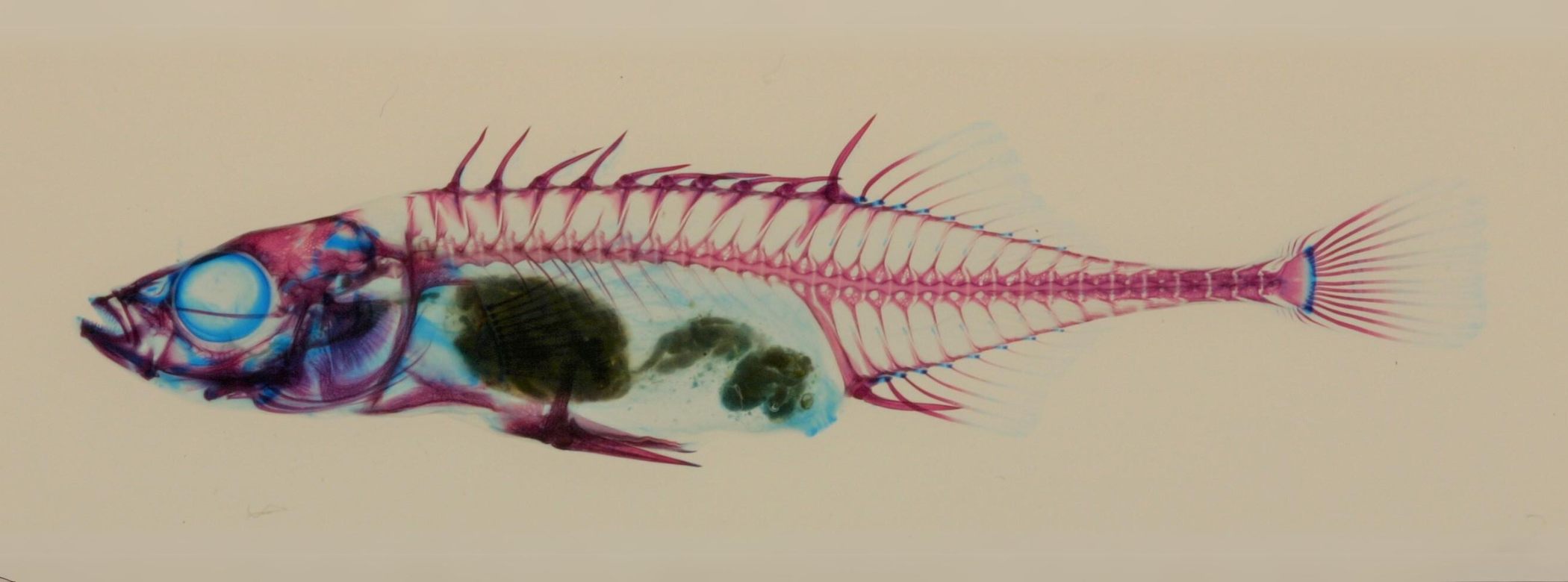
The large dark cloud in the water on either side of the culvert is a school of brook stickleback (Culaea inconstans), a common non-game fish found in ponds, marshes, bogs and streams across most of Manitoba. In spring, these small fishes (to about 60 mm long) move from larger bodies of water to smaller ones where the females lay eggs in nests built and guarded by the males.

So finding migrating brook sticklebacks is not particularly noteworthy, but from the photos I estimate there are about 8000 individuals in this one school!! This is an incredible number of fish in a small area. This huge mass of fish got me thinking about the number of small animals that we tend to take for granted. We pay attention to the billions of mosquitoes (although not so many this year!) and the 1.2 million people in Manitoba, but what about the small vertebrates like sticklebacks that don’t seem to have much impact on us?

Brook stickleback are very common, but many of us don't know they even exist or we take them for granted.

Brook stickleback are very common, but many of us don't know they even exist or we take them for granted.

Brook sticklebacks, like many small fishes, are an annual species, meaning that individuals born one summer are the adult breeders in the next. Very few last more than two summers. This is a huge turnover in biomass – think about that school of 8000 fishes, and a brand new one of those every year in just that one place! This kind of turnover is very important for nutrient cycling within the ecosystem. These small fishes grow fast and eat a lot of insects and aquatic larvae, and are themselves food for larger fishes, birds and mammals.

The large numbers of small fishes and frogs cycle nutrients up to more conspicuous top predators like this great blue heron.

The large numbers of small fishes and frogs cycle nutrients up to more conspicuous top predators like this great blue heron.

We hear a good many frogs in spring as they call for mates, but tend not to think about them for the rest of the year as they become  less noticeable. But they are there all year, and in large numbers. During my fieldwork, I hear boreal chorus frogs (Pseudacris maculata) all along Highway 6 . If we take a 50 metre swath on either side of the highway to cover roadside ditches, and conservatively estimate one singing frog for every 500 square metres, that would mean 200 calling frogs for every kilometre of road. Calling frogs are male, so with equal sex ratios we have 400 chorus frogs each kilometre, or about 300,000 chorus frogs in the ditches along Highway 6 from Winnipeg to Thompson! And there are thousands of kilometres of roadside ditches all across the province.

A boreal chorus frog from north of Flin Flon. These small frogs (about 25 mm long) are extremely common in Manitoba and come in a variety of colour patterns from green to brown and plain, striped or spotted.

A boreal chorus frog from north of Flin Flon. These small frogs (about 25 mm long) are extremely common in Manitoba and come in a variety of colour patterns from green to brown and plain, striped or spotted.

If somewhat less than one tenth of the range of boreal chorus frogs in Manitoba is suitable habitat, there are almost 50 billion square metres of chorus frog living space in the province. Even at the conservative estimate of one pair per 500 square metres, there would be almost 100 million chorus frogs in Manitoba! In June, with an additional 100 or more tadpoles per pair, there could be as many as 5 billion individuals in the province’s chorus frog population at its peak. That is a lot of bugs eaten and a lot of food available for other more conspicuous animals that we enjoy in our travels.

Even if these rough estimates are off by two orders of magnitude, there are still millions of chorus frogs in Manitoba, just as there are additional millions of individuals of other species of frogs and small fishes (like brook stickleback). These under-appreciated, inconspicuous animals in our fields and forests play a huge role in maintaining a functioning environment. Our tiny fishes and frogs are living examples of when a small thing means a lot.

I Tawt I Taw a Puddy Tat!

Seeing cats in Manitoba doesn’t take a whole lot of effort. I have one that lives in my house (and only in my house), and too many that wander around the neighbourhood doing a number on birds and getting hit by cars. And there are always cartoon cats on TV or the web like Sylvester (of Bugs Bunny fame) as he tries to capture and eat Tweety – that yellow bird’s frequent (and distorted)exclamation being the source of this blog’s title. But seeing the province’s native wild cats is quite a bit more challenging than seeing these domestic versions.

Skulls of the three species of wild cats in Manitoba from the Museum collection. From left to right: lynx (from Nopiming Prov. Park, MM2057), bobcat (from Whiteshell Prov. Park, MM21400), cougar (from Erickson near Riding Mountain Nat. Park, MM23281). Scale is marked in centimetres.

Skulls of the three species of wild cats in Manitoba from the Museum collection. From left to right: lynx (from Nopiming Prov. Park, MM2057), bobcat (from Whiteshell Prov. Park, MM21400), cougar (from Erickson near Riding Mountain Nat. Park, MM23281). Scale is marked in centimetres.

We have three wild cat species quietly slinking through our woods and fields. Two are quite rare in Manitoba and all are shy, so a special effort and/or a little luck are needed to see one. The most common is the lynx (Lynx canadensis), a Canadian shield and boreal cat, usually around 10kg with long ear tufts, a stub tail with a black tip, and a luxurious fur that has made it a staple of the trapline for centuries. Despite its relative abundance, it is infrequently seen, even by those that spend a good deal of time outdoors. The bobcat (Lynx rufus) is of similar form, but with shorter ear tufts and a striped stub tail. It is about the same size or a little larger than the lynx, but found only in the southern tenth of the province and is considered uncommon.

An impressive paw of the Erickson cougar, a 53kg male, held in a gloved hand during specimen preparation. Imagine the size of a paw on a big male over 100kg!

An impressive paw of the Erickson cougar, a 53kg male, held in a gloved hand during specimen preparation. Imagine the size of a paw on a big male over 100kg!

The most romanticized member of the cat family in Manitoba is the cougar (Puma concolor). Big males of this magnificent cat can be over 100kg, but most are smaller, and females reach about 60kg. Its status in the province was a bit of a mystery, with only vague historical records until more reliable reports began in the 1940s. But it was not until 1973 that an actual specimen was available, a small male (43kg) shot while near livestock in Stead, about 90km northwest of Winnipeg. Two others, one shot and another accidentally snared, were taken in 2004 around Riding Mountain National Park (near Grandview and Erickson) . All three of these specimens are in the Museum collection. There have been several well-documented and publicized sightings since then in Plum Coulee, Duck Mountain, Lac du Bonnet and Morden (among others).

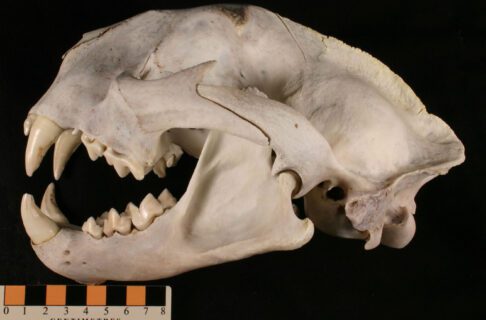
Side view of the Turtle Mountain cougar skull recently added to the Museum collection. The scale bar is in centimetres.

Side view of the Turtle Mountain cougar skull recently added to the Museum collection. The scale bar is in centimetres.

Just a few months ago, the Museum received a fourth cougar specimen that had been accidently snared (the snare was legally set for coyotes) in the Turtle Mountain area in January of this year. This is by far the biggest specimen we have, a male weighing in at about 66kg. Although it is unfortunate that these animals have been killed, it is fortunate that their remains are deposited at the Museum. Here, they can be made available to the scientific community so that we can learn more about cougars in Manitoba. With so few sightings, actual specimens will help us determine where our cougars are coming from. Using DNA and genetic techniques, researchers are examining whether our cougars are resident or if they are wanderers from established populations in the Dakotas. The age and health of the specimens can also be detemined. The cougar specimens will continue to provide information and educational opportunities for as long as our collections exist.
400-turtle-mtn-cougar-frontal-crop
Front views of the Turtle Mountain cougar skull with mouth closed and mouth open. Intimidating any way you look at it!

Front views of the Turtle Mountain cougar skull with mouth closed and mouth open. Intimidating any way you look at it!

Sightings of cougars seem to be on the rise. And there are those two other smaller Manitoba wild cats, the lynx and the bobcat, that are also superb animals. So if we keep our eyes open and have a little luck, maybe more of us will soon be able to quote that cartoon canary, Tweety: “I did! I did! I did taw a puddy tat!” And those are some impressive “puddy tats.”

Manitoba Jellies: not your Grandmother’s preserves

No, I’m not about to give a recipe for Saskatoon berry jam, but instead introduce some members of an animal group that most would never associate with Manitoba: jellyfish. Jellyfish are, of course, not fishes at all, but part of a very interesting phylum of animals called the Cnidaria [nie-dare-ee-a] that includes corals, sea anemones, and jellyfish. Some of you might remember high school biology and examining the superficially plant-like Hydra, a hydrozoan cnidarian, under a microscope. The term “jellyfish” refers to similar-looking stages of the lifecycles of various members of the Cnidaria that are not necessarily closely related.

Aurelia, a genus of typical jellyfish found in Pacific, Atlantic, and Arctic Oceans. It is also known from James Bay and might occur off the Manitoba coast. Photo courtesy of G. Young, copyright.

Aurelia, a genus of typical jellyfish found in Pacific, Atlantic, and Arctic Oceans. It is also known from James Bay and might occur off the Manitoba coast. Photo courtesy of G. Young, copyright.

The unique characteristic that links all members of the Cnidaria are very specialized cells called cnidocytes [nie-doe-sites] that contain some of the largest and most complex intracellular structures known – the cnidae [nie-dee]. These are hollow, harpoon-like threads that fire at or into potential food at speeds of over 9m/sec with the force of a bullet! They are either adhesive or inject a toxic cocktail of phenols and proteins to capture prey. [For a technical discussion, see Current Biology.] The hundreds of thousands of these cnidae that are triggered by the brush of a finger are what makes a sea anemone’s tentacles feel sticky. In some species of hydrozoans and jellfish with particularly nasty neurotoxins, cnidocytes (sometimes called nematocysts) are the cause of severe pain and even death in humans that might touch them.

But what, you might ask, do cnidarians (and jellyfish) have to do with Manitoba? Actually, cnidarians are incredibly common in the province, but mostly as fossils. Many species of fossil corals are known, and often make up part of the  popular Tyndall stone found cladding many buildings (including the provincial legislature and The Museum). Fossil jellyfish have recently been described from rock over 440 million years old by The Museum’s paleontologist, Dr. Graham Young. These and other discoveries form an integral part of the Ancient Seas gallery that opened just last spring. This award-winning gallery, using fossils and scientific animation brings that early Manitoba to life when cnidarians were commonplace here.

The Ancient Seas gallery and a peak at the large screen theatre that brings the fossils to life, including jellyfish and corals.

The Ancient Seas gallery and a peek at the large screen theatre that brings the fossils to life, including jellyfish and corals.

We also can’t forget that Manitoba has ocean frontage! Hudson Bay is home to over 60 species of cnidarians, including several species of jellyfish. The first image in this blog, the scyphozoan jellyfish Aurelia, is a genus recorded for James Bay. Not all of these species might wash ashore along our northern coastline, but some certainly do. One of the most spectacular is Cyanea capillata, the lion’s mane jellyfish, perhaps one of the largest invertebrates by some measures. Although most individuals are smaller, some have a bell (body) reaching over 2 metres in diameter and tentacles that are over 30 metres long! Our Arctic/Subarctic gallery  has a meticulously prepared model of this species.

A lion's mane jellyfish, Cyanea capillata, washed ashore in the Churchill River estuary in Manitoba. The bell (body) on this specimen is about 50cm across. Photo copyright of David Rudkin, Royal Ontario Museum.

A lion's mane jellyfish, Cyanea capillata, washed ashore in the Churchill River estuary in Manitoba. The bell (body) on this specimen is about 50cm across. Photo copyright of David Rudkin, Royal Ontario Museum.

For a more southern taste of jellyfish, you might recall the report late last summer of a “first” record of jellyfish for the province in the Whiteshell area (southeastern Manitoba). There were reports of a bloom of small jellyfish about the size of a quarter or smaller, found in the hundreds in a couple of isolated bays of Star Lake. The species of jellyfish is Craspedacusta sowerbyi, harmless to humans, but a critter with an interesting history. It was originally described in the 1880s from ornamental water lily tanks in London, England, and thought to have come from South America. Further research suggests it is actually a Chinese species. With the popularity of aquatic ornamental plants and through other means, it had made its way to eastern North America by the early 20th century and has gradually spread throughout large portions of the United States and southern Canada. It has been regularly reported from Wisconsin and Minnesota since about 1969, so it would have seemed only a matter of time before it would turn up in Manitoba.

The freshwater jellyfish, Craspedacusta sowerbyi, of variable size but no bigger than a quarter.

The freshwater jellyfish, Craspedacusta sowerbyi, of variable size but no bigger than a quarter.

As it happens, this species of freshwater jellyfish was recorded by a reputable source in Star Lake and other Whiteshell area localities as early as 1972! Unfortunately, no voucher specimens were retained at that time, but The Museum was fortunate enough to obtain a small collection of this year’s bloom from Doug Collicutt. These will provide a permanent physical record of the species’ occurrence in the province.

Some of The Manitoba Museum specimens of Craspedacusta from Star Lake.

Some of The Manitoba Museum specimens of Craspedacusta from Star Lake. The specimen at the upper right is the one with the quarter in the preceding image. Most are much smaller than a quarter.

Our Manitoba freshwater jellies occur in obvious blooms in a lake ringed by cottages, so how did they manage to be seen in 1972 and not again until 2010! The answer probably lies in its lifestlye. Like most cnidarians, Craspedacusta exhibits an alternation of generations, that is, part of its life history is spent as an inconspicuous asexual polyp attached to aquatic plants or other underwater substrates in rivers, lakes or stagnant ponds. The polyp buds off new polyps that can remain attached to the parent to form a colony (less than 10mm), or to be released as a frustule larva that can move around before metamorphosing into a new polyp. The polyp can avoid unfavourable conditions (like winter) by entering a resting stage called a podocyst. It is believed that it is during this phase that the species is transported to new habitats and has managed to spread from China to North America and around the world. The podocysts become polyps again in summer. When conditions are just right, usually requiring high water temperatures (about 20-25°C), the polyps bud off free-swimming hydromedusae, the part of the lifecycle that we recognize as jellyfish. These hydromedusae (jellyfish) are either male or female, and will release eggs and sperm to produce a new kind of larva, the planula, that grows into a polyp.

The lifecycle of Craspedacusta sowerbyi. The medusa stage, or jellyfish, is a very small part, and only occurs when water temperatures are high. Reproduced with permission by Dr. T. Peard.

The lifecycle of Craspedacusta sowerbyi. The medusa stage, or jellyfish, is a very small part, and only occurs when water temperatures are high. Reproduced with permission of Dr. T. Peard.

The high temperatures required to produce the jellyfish stage explains why they are found only in late summer, as our lakes take a while to warm up. And it also explains why these blooms of jellyfish are so rarely seen; most of our lakes won’t normally reach the required temperatures. The species goes quietly about its business as a podocyst in winter and a polyp in summer, only very rarely encountering the conditions favourable for producing the jellyfish stage – the conditions during 1972 and 2010. Although it is known that several years can go by between blooms, jellyfish might have been produced between these dates, but the conditions are so fleeting that perhaps few jellyfish would have been produced and perhaps missed by the casual observer.

Finding freshwater jellyfish in such a frequented spot in Manitoba is exciting! Although this species is a foreign invader, research has yet to show if it harms native organisms, but one might expect it would provide at least some competition for the small water animals it eats. Regardless, its unexpected occurence shows there remains a great deal of undiscovered animal diversity right in our own backyards. And some of these Manitoba “jellies” are preserved for study at The Manitoba Museum.

So keep your eyes open for jellyfish around your cottage this summer. If you find any,  please report them to me, Manitoba Conservation or to freshwaterjellyfish.

Century Eggs of a different flavour

Century eggs are a Chinese traditon where eggs are placed in an exotic recipe of alkaline clay and brine solution over several months. This preserves them for later consumption, and the chemical changes in the egg proteins makes for an interesting flavour. Of course, these “century” eggs are not, in truth, one hundred years old. The Museum, however, does have actual century eggs that have been carefully prepared and preserved for later use, and can provide science with a very tasty treat.

Century eggs. On the left, the Chinese version where colours should change to insure preservation (photo from Wikimedia Commons). On the right, The Museum version as exemplified by Black-legged Kittiwake eggs collected by A.C. Bent in 1911. Preserving the original colours and shapes are what makes museum eggs valuable.

Century eggs. On the left, the Chinese version where colours should change to insure preservation (photo from Wikimedia Commons). On the right, The Museum version as exemplified by Black-legged Kittiwake eggs collected by A.C. Bent in 1911. Preserving the original colours and shapes are what makes museum eggs valuable.

I’m afraid I couldn’t help myself, and once I had found 100-year-old eggs in the collection for my last blog post, I thought I would see if we had others. The Museum has 8 sets of eggs that are 100 years old this year. And we do have even older-than-century eggs, with over 120 clutches collected before 1911. The oldest is a set of five Clapper Rail eggs collected in Louisian in April 1880.

Clapper Rail eggs collected in New Orleans in April 1880 (MM1.21-160).

Clapper Rail eggs collected in New Orleans in April 1880 (MM1.21-160).

Of the actual century eggs in the Museum collection, two were collected by Arthur Cleveland Bent of Bent’s Life Histories fame, and examined in the last posting. Of the remaining sets, there is a Sandhill Crane from Alaska,  a Grey Heron from Scotland, a Double-crested Cormorant from Quebec, a Caspian Tern from California, a Clapper Rail from Virginia, and an Osprey from New Jersey.

A Sandhill Crane egg from Alaska at left (MM1.21-142) and two Grey Heron eggs from Scotland (MM1.21-129), all 100 years old.

A Sandhill Crane egg from Alaska at left (MM1.21-142) and two Grey Heron eggs from Scotland (MM1.21-129), all 100 years old.

If you can’t eat these century eggs, what good are they? Older collections are valuable because they provide proof (a voucher) that a particular species occurred in a certain area and, in the case of eggs, provide evidence that the species was breeding. This can be important for species recovery planning and ecosystem rehabilitation.

Century eggs of Double-crested Comorant at left (MM1.21.-106) and Caspian Tern at right (MM1.21-66).

Century eggs of Double-crested Comorant at left (MM1.21.-106) and Caspian Tern at right (MM1.21-66).

Older specimens also provide an opportunity to examine ecosystems at the time they were collected – another Museum collection time machine.  Using various chemical analyses, scientists can determine how nutrients were cycled in an ecosystem in the past and compare how those same nutrients cycle today. Are the processes the same? If not, why not? Similarly, original background levels of various elements and chemicals can be determined from old specimens. Are today’s activities changing the levels of particular compounds in our environment compared to what they were 100 years ago?

Clutches of Clapper Rail and Osprey eggs, each 100 years old and perhaps providing a record of environmental conditions at that time.

Clutches of Clapper Rail and Osprey eggs, each 100 years old and perhaps providing a record of environmental conditions at that time.

With an active and thoughtfully built museum research collection, the history and pattern of chemical signals in our environment as well as general ecosystem health and composition over the last 130 or more years can be studied and compared. This can help us better understand ecological processes and inform us on how to better manage our environment. It is worth keeping in mind, though, that the original collections were made not for some planned future application, but for the plain joy and fascination in the world around us. Taking an active interest in nature and exploring its riches just out of pure curiosity, just to know, will take us places and provide opportunities we would never have had otherwise.

I wouldn’t recommend making a meal of the Museum century eggs , but they certainly can give science and society a great deal to chew on.

A real time machine: Museum collections

I’m sure you are familiar with this scenario: getting on the internet for a specific nugget of information and then finding yourself some significant time later on some odd, but interesting tangent, and wondering, “How did I end up here?!”   Browsing the Museum collections can be a bit like a 3-dimensional internet search, where examining one specimen can bring you on a voyage across space and time to a fascinating and unexpected place.

I recently had that experience when checking our collection to see what material we had of Black-legged Kittiwake. In an earlier blog, I related my recent sighting of this gull species in southern Manitoba where it is very rarely seen. I was curious to see if we had any kittiwake specimens. As it turns out, we have no adult specimens, but I found that the Museum houses some kittiwake eggs!

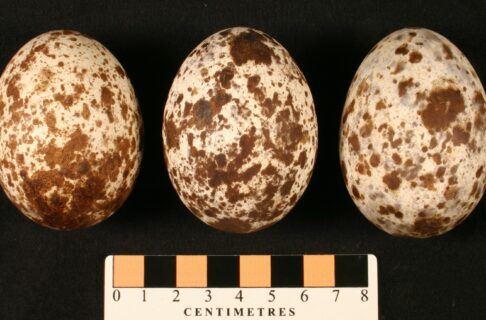
Black-legged Kittiwake eggs collected 100 years ago by Arthur Cleveland Bent in the Museum collections (MM1.21-44).

Black-legged Kittiwake eggs collected 100 years ago by Arthur Cleveland Bent in the Museum collections (MM1.21-44).

Kittiwakes do not breed in Manitoba, so of course these were not collected in the province. It is not all that surprising to find specimens from out-of-province in the collections; we use this material for reference and to put more local collections in a world context. The kittiwake eggs had come to the Museum as part of a Winnipegger’s private collection obtained in 1969, a collection that also happens to provide some of the earliest specimens of birds from Manitoba that the Museum has (Sandhill Crane and Bald Eagle, 1894). The fact that got me hooked on the kittiwake eggs was that they had been collected 100 years ago by none other than Arthur Cleveland Bent.

Now, unless you are a student of ornithology or an avid birder, you are unlikely to recognize this name. Bent was a successful businessman with an interest in birds, and was commissioned by the Smithsonian Institute in Washington, D.C. to write a series entitled, Life Histories of North American Birds. This series became his own life history, as he eventually produced 21 volumes published from 1919-1968, with the last few completed posthumously from his notes. Although encyclopedic in nature and remaining a standard reference, these books are surprisingly entertaining to read and contain some wonderful natural history writing that gives an authentic account of what fieldwork and life (not just bird-life) was like in the early 1900′s, and shares the joy of discovery.

And here in Winnipeg, we had kittiwake eggs collected by this same Arthur Cleveland Bent in 1911! Now curious, I checked and was rewarded to find that we also had an egg collected by him in that same year of the Parakeet Auklet, a mostly grey, puffin-like bird that lives in the northwest Pacific Ocean.

Parakeet Auklet egg (MM1.21-18) collected by A.C. Bent in 1911 from Walrus Island in the Pribilofs.

Parakeet Auklet egg (MM1.21-18) collected by A.C. Bent in 1911 from Walrus Island in the Pribilofs.

In two of his marvelous volumes (Diving Birds, 1919; Gulls and Terns, 1921), we find Bent’s original field notes describing the collection of the eggs we have in The Manitoba Museum. Both the kittiwake and auklet eggs were collected from tiny Walrus Island just off St. Paul Island in the Pribilof Group off Alaska. Bent described these birds as spending “…the greater part of their lives at sea and return[ing] to these lonely fog-bound islands in Bering Sea to rear their young, where they are wholly engrossed with the cares of reproduction.”

Getting to the islands was an adventure in itself: “Our introduction to the famous fur-seal islands was characteristic of that dismal climate. We had been sailing by compass all night from Bogoslof Island, and morning found us still groping in the prevailing thick fog, which serves to keep the seals’ coats cool and moist, but is a menace to mariners. At last, when we had about concluded that we had missed our reckoning and had passed the islands, we began to see a few of these large white-breasted auklets flying past us to the eastward. Turning, we followed them, and before long we could hear the barking, roaring, and bellowing of the fur seals in their rookeries on St. Paul Island. Feeling our way carefully toward them until we could dimly see the outline of the cliffs, we crept along the shore into Village Cove [the main town].”

 How about navigating by auklet instead of GPS!! That would sure cramp our style nowadays when we even have to punch in coordinates to find the local Tim Horton’s, never mind a tiny island in a northern sea!

A map showing the location of Walrus Island (red dot) in the Pribilofs and Bogoslof Island (black dot) in the Aleutians. Bent sailed from Bogoslof to St. Paul Island (the main island near Walrus), some 400 km, through a thick fog by compass only. They found the island by following sea birds.

A map showing the location of Walrus Island (red dot) in the Pribilofs and Bogoslof Island (black dot) in the Aleutians. Bent sailed from Bogoslof to St. Paul Island (the main island near Walrus), some 400 km, through a thick fog by compass only. They found the island by following sea birds.

Despite the initial doubtful outcome of the trip, Bent had no reservations about his work once there: “On July 7, 1911, I spent one of the most eventful afternoons of my life studying the nesting habits of this and the hosts of other sea birds that make their summer home on the wonderful, little, rocky islet of the Pribilof group, Walrus Island.”

I am fond of Bent’s description of the kittiwakes and their nests from which our Museum eggs came: “In Bering Sea we found this to be one of the commonest gulls and found it breeding on all of the islands where it could find high rocky cliffs. On Walrus Island, where there are no high cliffs, we had an unusually good opportunity to examine the nests. Among the hosts of sea birds which made their summer home on this wonderful island a few little parties, of from four to six pairs each, of Pacific kittiwakes found a scanty foothold on the vertical faces of the low, rocky cliffs. Here their nests were skillfully placed on the narrow ledges or on little protuberances which seemed hardly wide enough to hold them, and often they were within a few feet of nesting California murres [another puffin relative] or red-faced cormorants, with which the island was overcrowded. The nests were well-made of soft green grass and bits of sod securely plastered onto the rocks and probably were repaired and used again year after year. They were well-rounded, deeply cupped on top, and lined with fine dry grass. Most of the nests, on July 7 [1911], contained two eggs, some only one, but none of them held young. The incubating birds and their mates standing near the nests were very gentle and tame. We had no difficulty in getting near enough to photograph them.” Or, apparently, to collect a few of their eggs!

A plate from A.C. Bent's "Life Histories of North American Gulls and Terns" (1921) likely showing the birds that laid the eggs in the Museum collection, and perhaps our eggs in the nest.

A plate from A.C. Bent's "Life Histories of North American Gulls and Terns" (1921) likely showing the birds that laid the eggs in the Museum collection, and perhaps our eggs in the nest.

Taking short trips like this in the Museum time machine, via collections and the natural history and human stories they tell, makes me wonder at times if I was somehow born a century (or more!) too late. Not as a knock on the modern approach, but wouldn’t it be fun to open up a modern nature guidebook and find such enjoyable, yet informative prose? Bent’s descriptions convey a joy in observation and discovery, as well as a respect for the organism that is inspiring. Museum collections and the stories they tell can help us make a better connection and foster a deeper appreciation for our fellow Earthlings and their habitats, something that can only be for the good as our world view is increasingly dominated by concrete, steel, asphalt, and electronic/entertainment media.

Bookmark and Share


Copyright 2002 - 2012 The Manitoba Museum